If you're comparing heat pumps for a home in Metro Vancouver, Langley, Mission, Abbotsford, or elsewhere in the Lower Mainland and Fraser Valley, here's the honest truth: not every brand marketed as "cold climate" performs the same once it actually gets cold. Some of the best options are ductless systems. They have years of proven performance in Canadian winters. Others, including our own Jetson Air, take a different approach. Jetson Air is ducted. It's built for real Lower Mainland and Fraser Valley cold snaps, and installed by one company from quote to service call. This guide compares them honestly, brand by brand, so you can pick what actually fits your home.
Best Heat Pumps for BC Winters: Top Cold-Climate Picks for 2026
An honest brand-by-brand look at which heat pumps hold up in a BC winter, and why Jetson Air leads our list.
ByJetson Team·Jetson Home·20 min read
We compared Jetson Air, Mitsubishi, Daikin, and Carrier on real cold-climate specs, not marketing claims, for Metro Vancouver and Fraser Valley homes, and said honestly where each one wins.
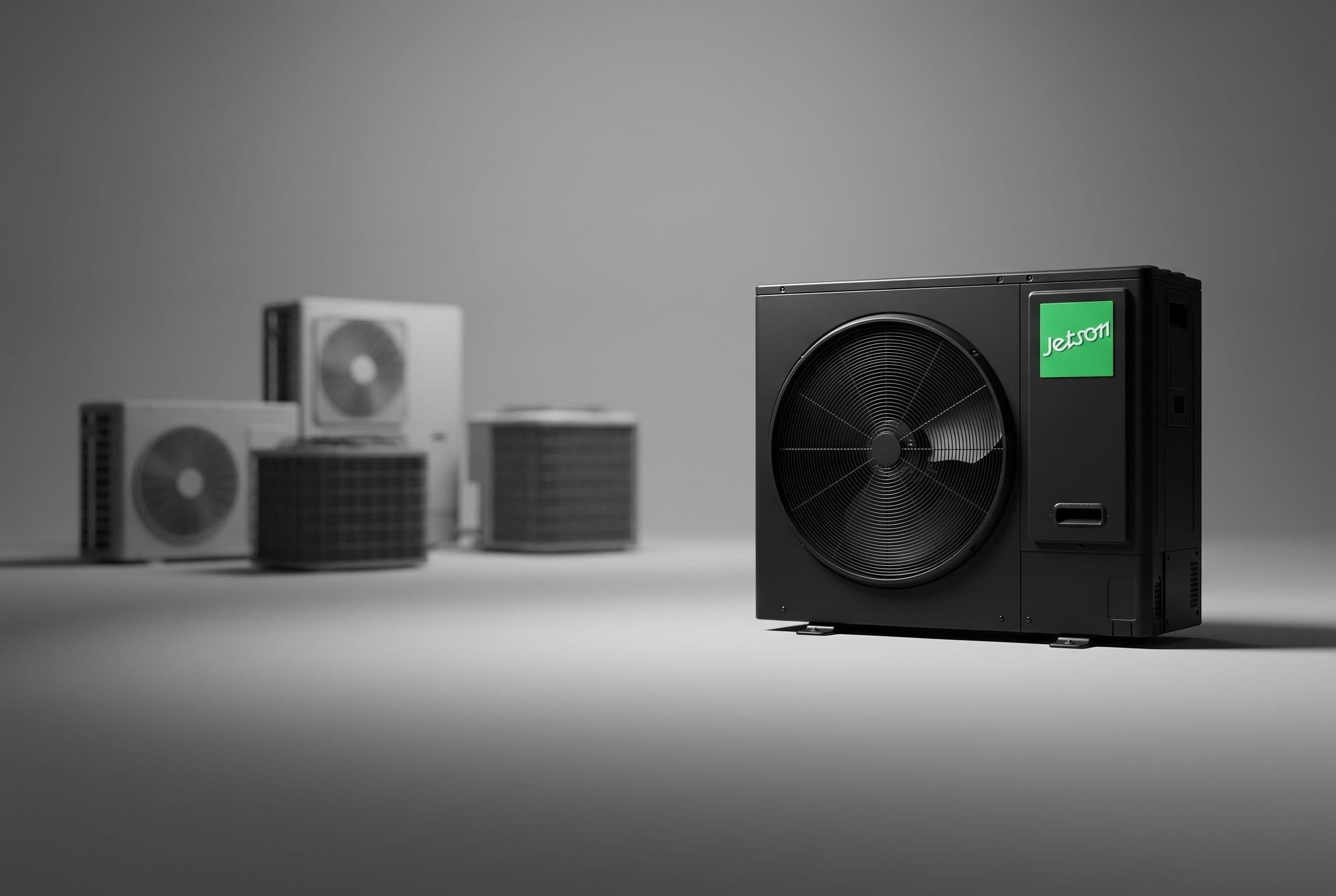
What to Look For in a Metro Vancouver Cold-Climate Heat Pump
Vancouver isn't Edmonton. Your home spends most of its heating hours between 0C and +10C, not at -25C or -30C, so a brand's coldest-rated number matters less than these:
- Real seasonal efficiency. HSPF2 measures performance across a full season, not just one cold-weather test point. Jetson Air is rated SEER2 17 and HSPF2 9.4.
- Correct sizing. An oversized system cycles on and off and wastes energy. Sizing should come from your home's actual data, not a rule of thumb.
- Ductwork and electrical, if going ducted. Undersized or aging ducts hurt performance no matter how good the equipment is, and older homes sometimes need electrical work too. Jetson checks both from photos as part of sizing.
- Ducted or ductless. Ducted usually costs less if you already have working ductwork. No ducts, or heating an addition? Ductless is often the better fit.
- Who's installing it. Installer quality matters more than a small spec gap between brands. Ask whether the crew is in-house or subcontracted. Jetson uses its own trained crews, not a dealer network. See our best heat pump installers in Metro Vancouver guide.
- Warranty, especially labor. Most manufacturer warranties cover parts only, and the company covering parts usually isn't the company doing the labor, that's a separate arrangement with your dealer, and it varies. Jetson Care Plus covers 10 years of parts and labor from the one company that designed, sized, and installed your system.
- Rebates. BC Hydro's Power Smart rebate, the income-qualified ECAP, CleanBC Better Homes, and OHPA (for oil-to-heat-pump switches) can all lower the cost. Confirm current terms before you budget around them.
- Refrigerant and noise. Jetson Air runs on R-454B. Its outdoor unit runs 46.5 dB in typical cooling, as low as 35.5 dB in silent mode, a quiet conversation or gentler.
- Compressor type and defrost handling. A variable-speed compressor ramps output up and down instead of switching fully on or off, which usually means steadier comfort and less noise. Ask whether that's just the indoor blower or the outdoor unit too, most "variable speed" quotes only mean the indoor side. Jetson Air modulates both the outdoor fan and compressor, not just the indoor blower. In a wet climate like ours, also ask how the system clears ice off the outdoor coil. Poor defrost design can cause real comfort dips during damp, cold weather.
- Price, once everything above is actually comparable.
Cold-weather performance still matters once a real outflow event hits. It just shouldn't be the only thing you compare.
BC Rebates
See what BC Hydro and CleanBC rebates could take off your price
Top Picks at a Glance
Zuba-Central and Aurora are Mitsubishi's and Daikin's dedicated Canadian cold-climate lines, not the same product as their US-market lineups; specs below are sourced from each manufacturer's own product pages, not a brand-wide average.
Jetson Air
Mitsubishi Zuba-Central
Daikin Aurora
Carrier/Bryant Greenspeed
Best For
Best overall for BC winters
Best ducted alternative for extreme cold
Best ductless option
Premium ducted alternative
System Type
Ducted, proprietary cold-climate heat pump (CDHP), 1.5-5 ton
Ducted, connects to existing ductwork
Ductless mini-split (wall or floor-mounted)
Ducted, variable-speed split system
Cold-Weather Positioning
Rated to -22F (-30C), HSPF2 9.4 for real seasonal performance, ENERGY STAR Cold Climate certified
100% rated capacity at -15C, continues producing heat down to -30C per Zuba-Central spec
100% capacity at -15C, continuous operation down to -25C (-13F) per Aurora spec
Infinity 21 Ultimate Cold Climate tier rated to -23F; the higher-efficiency Infinity 23 tier only holds to -13F, so confirm which tier you're quoted
Warranty
10 years parts and labor with Jetson Care Plus
Varies by dealer and registration
Varies by dealer and registration
Typically 10yr parts if registered within 90 days, varies by dealer
Outdoor Unit Noise
46.5 dB typical, 35.5 dB silent mode
Not published for this line
Not published for this line
Not published for this line
1. Jetson Air: Best Overall for BC Winters
Jetson Air is a ducted, all-electric heat pump built for real cold, not just marketed for it. It's rated SEER2 17 and HSPF2 9.4, holds heat down to -22F (-30C), and carries ENERGY STAR Cold Climate certification, real numbers you can check, not a range. It runs on R-454B refrigerant, ships in sizes from 1.5 to 5 tons, and was named one of TIME's Best Inventions of 2025.
One thing sets it apart mechanically: both the compressor and the outdoor fan are variable-speed, not just the indoor blower, which is where most "variable speed" quotes stop short. Instead of blasting at full power and shutting off, it runs continuously at a lower level. That's what keeps a house at an even temperature instead of swinging a few degrees every cycle, and what fixes the room that's always too hot or too cold, since air keeps moving through the house instead of only during a short burst. It's also why the outdoor unit runs quiet, as low as 35.5 dB in silent mode.
The system also watches itself. If output drops or the outdoor unit starts underperforming, for example something blocking it after a renovation, monitoring flags it, often before you'd notice anything indoors, instead of the first sign of trouble being a cold house on the coldest night of the year. It also gets real software updates after install, so the system keeps improving instead of being stuck at day-one performance. And it's the only heat pump on this list that continuously monitors indoor air quality, CO2, smoke, and particulates, which matters more here than in most places: running the fan during wildfire season actually helps clear smoke from the house faster.
What actually ranks it first, though, is who stands behind all of that. Jetson designs, sizes, installs, and warranties the system, all as one company. That means 10 years of parts and labor through Jetson Care Plus, not a manufacturer covering parts while a separate dealer handles labor. If a system is ever found undersized after install, Jetson replaces it with a larger unit at no cost. Getting a price works differently too. Most manufacturers route you through a dealer, which often gives you a quote only after a paid in-home visit. Jetson's quote is free and online: enter your address and a few home details, and you get a real price in minutes, no one has to come look at your house first. That price is also lower than the equipment alone would suggest, because Jetson designs and builds the system and sells it directly, skipping the distributor and dealer markup that normally gets added on top before a homeowner ever sees a quote. That means more of what you pay goes toward the actual equipment and install, not sales layers you'll never interact with.
There's also no good, better, best lineup to navigate here, no Bronze, Silver, or Gold tier to figure out first. That's the exact confusion that trips people up with Mitsubishi, Daikin, and Carrier above: two quotes for "the same brand" can turn out to be completely different systems. With Jetson Air, there's only one system, so the specs you see are the specs you actually get.
What real owners report: on r/heatpumps, a Colorado homeowner who replaced a 2001 furnace and AC with a 4-ton Jetson Air package saw exactly that in practice: the house held within a degree or two of setpoint throughout, instead of the 6 to 8 degree gap between floors they had before. They also measured about 100 kWh less electricity per week for cooling. One account, not a guarantee, but real and dated.
ENERGY STAR Cold Climate Certified
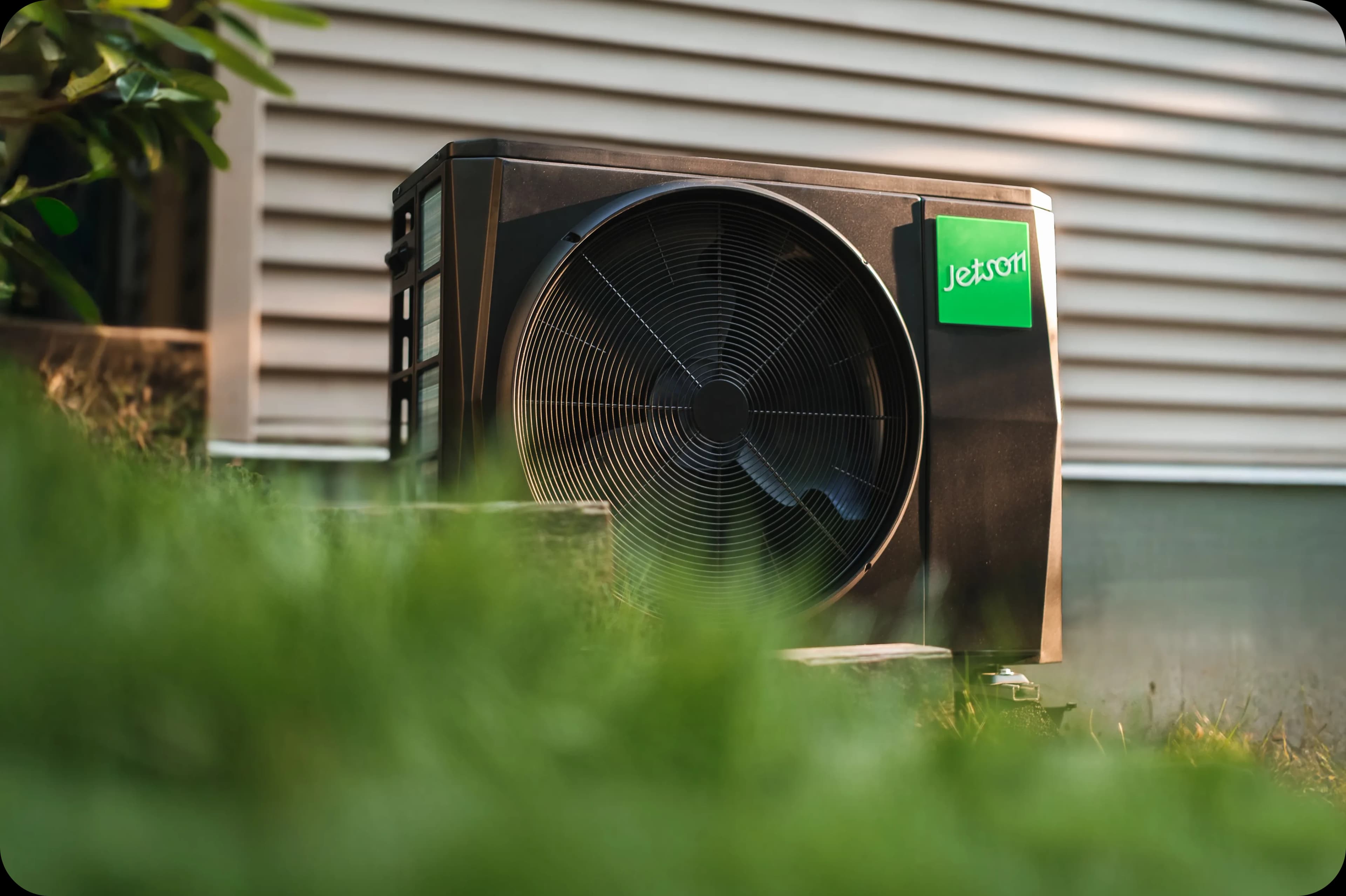
Jetson Air: Best Overall for BC Winters
Built and installed by Jetson from design to commissioning, at 1.5-5 tons to fit most BC homes, and named one of TIME's Best Inventions of 2025. Rated to keep heating through a real Fraser Valley cold snap, not just a mild coastal winter.
★
ENERGY STAR Cold Climate Certified
Jetson's very first two markets were Denver, Colorado and British Columbia, two places known for genuinely cold, wet winters. Jetson Air was designed for real cold weather from day one. It wasn't built for a mild climate and adapted later.
No sales visit required
See your instant Jetson Air price for your Lower Mainland home
2. Mitsubishi: Zuba-Central for Ducted Homes, Hyper-Heat for Ductless
Mitsubishi sells two distinct product lines worth separating here, since they solve different problems. Zuba-Central is Mitsubishi's ducted cold-climate line, built for the Canadian market. It connects to your existing ductwork, like a furnace replacement. It delivers full rated heating capacity at -15C, and keeps producing heat down to -30C. That's the direct, ducted competitor to Jetson Air on this list, not a ductless system.
Separately, Mitsubishi's Hyper-Heat H2i ductless mini-split lineup is what built the brand's cold-climate reputation in Canada. It's a genuinely strong choice if:
- You're adding a room without ductwork
- Your home heats with baseboard or electric resistance heat, not ducts
- You want to control the temperature in each room separately
What real owners report: on r/heatpumps, a Zuba-Central owner running a 3.5-ton system (PVA-A42AA7 indoor, PUZ-HA42NKA1 outdoor) reported no resistive-backup use through a week of -10C to -25C weather, three winters in, and shared the manufacturer's published COP figures: 3.6 at 8C, 2.1 at -8C, 1.9 at -15C. On the caution side, another owner on the same subreddit described the resistive backup getting stuck on during a -23C cold snap while the heat pump itself never kicked back in, with no error code found; a commenter suggested it was a thermostat configuration issue rather than a hardware fault. One account either way, not a verdict on the line, but real and dated.
Mitsubishi's dealer network in BC is well established for both lines. To be direct about it: Jetson doesn't sell or install Mitsubishi equipment. If you're comparing Jetson Air against a Zuba-Central or Hyper-Heat quote for a home that already has ductwork, our Jetson Air vs. Mitsubishi comparison walks through where each system tends to make more sense.
3. Daikin Aurora: Best Ductless Option
Daikin's Aurora line is a ductless mini-split system, with wall or floor-mounted indoor units. It competes directly with Mitsubishi's Hyper-Heat on cold-climate performance. Note: this is different from Daikin FIT, the ducted line Daikin sells in the US. Daikin rates Aurora models up to 21 SEER2. It delivers full heating capacity at -15C and keeps running down to -25C (-13F).
Daikin has a large, established dealer network across BC, and Aurora is a legitimate first call for additions without ductwork, homes without existing forced-air heating, or anyone who wants to zone individual rooms.
What real owners report: on r/heatpumps, an owner reported an Aurora ductless unit holding 60F indoors with no problem at -12F (-24C) outside, in a poorly insulated, leaky pool house, a genuinely tough test case for any system. The post has 41 upvotes and a 92% upvote ratio, consistent with other owners recognizing the same result rather than one outlier.
Jetson doesn't sell or install Daikin equipment. Our Jetson Air vs. Daikin comparison covers Daikin's ducted FIT lineup specifically, the more directly comparable product to Jetson Air if your BC home already has ductwork.
4. Carrier/Bryant Greenspeed: Premium Ducted Alternative
Carrier's Greenspeed lineup (sold under the Bryant brand in some cases) is a variable-speed ducted heat pump. It's positioned at the premium end of the market. Carrier has decades of HVAC brand recognition in Canada. Greenspeed's compressor modulates output instead of cycling fully on and off, which tends to mean steadier comfort and quieter operation.
Carrier splits cold-weather performance and efficiency across two different flagship models, not one:
| Model | Best at | SEER2 | Cold-weather floor |
|---|---|---|---|
| Infinity 23 | Efficiency | Up to 23 | -13F |
| Infinity 21 Ultimate Cold Climate | Cold-weather reliability | 21.2 | -23F |
If cold-weather reliability matters more to you than the highest SEER2 number, confirm which of the two you're actually being quoted.
That premium positioning generally comes with a premium price tag. If you've gotten a Carrier or Bryant quote that's noticeably higher than others you're comparing, that's consistent with where the brand sits in the market, not necessarily a sign something's wrong with the quote.
Worth knowing separately: in 2017, Health Canada issued a recall notice for eight Carrier Greenspeed and Bryant Evolution Extreme heat pump models. About 2,000 were sold in Canada between June 2011 and February 2015. A control-board defect could cause the unit to overheat, a fire risk. That's an older generation, not the current Infinity 21/23 models discussed above. Still, it's worth asking your installer about if you're quoted an older or refurbished unit.
As with the other brands above, Jetson doesn't sell or install Carrier or Bryant equipment. Our Jetson Air vs. Carrier comparison breaks down how the two compare on cost and cold-weather performance for ducted homes.
Why SEER2 and HSPF2 Alone Can Mislead You in BC's Climate
Here's where a lot of comparison shopping goes wrong. SEER2 and HSPF2 ratings are useful for comparing efficiency. But they're measured under standardized lab conditions. Those conditions don't map cleanly onto the Lower Mainland's climate, because a Vancouver winter and a Langley or Abbotsford winter aren't quite the same thing:
| Area | Typical winter low | During a winter outflow event |
|---|---|---|
| Coastal Vancouver / Metro core | Rarely below -5C to -10C | Rarely much colder |
| Fraser Valley (Langley, Abbotsford, Mission, Chilliwack) | Similar to the coast most days | Can push noticeably colder for a few days, still nowhere near BC's Interior |
That gap is exactly what a coastal-only spec sheet misses.
A heat pump with a great HSPF2 number measured under mild conditions can still lose a large share of its heating capacity once it's genuinely cold outside. That's the gap a cold-climate heat pump rating is supposed to capture. If you're right on the coast, that gap matters less, since you're unlikely to see the temperatures where it shows up. If you're further inland in the Fraser Valley, it's a spec worth checking closely rather than assuming a coastal-friendly rating covers you too. For more on how these systems actually perform once temperatures drop, see our guide to cold-climate heat pumps.
Do You Need Backup Heat in BC?
For nearly every home in Metro Vancouver and the Fraser Valley, no. A correctly sized cold-climate heat pump covers the entire heating load on its own, even during a winter outflow cold snap.
When backup is added, it's an electric heat strip built into the system itself, not an old gas furnace kept running alongside it. Jetson doesn't offer dual-fuel setups. Jetson adds a heat strip in a few specific cases: your ductwork can't handle a full-size unit's airflow (common in homes built before 1990), your mechanical room doesn't have space for the correctly sized unit, or you simply want a guaranteed setpoint no matter how cold it gets outside. In any of those cases, the heat pump is sized down slightly and the heat strip covers the gap. It's backup only, never the primary source of heat.
If you're weighing a heat strip against keeping a separate furnace as backup, our heat pump vs. dual fuel guide covers that tradeoff in more depth.
The Warranty Question Most Comparisons Skip
Most heat pump comparisons focus entirely on upfront price and skip past the warranty, which is a mistake. Manufacturer parts warranties across the major cold-climate brands tend to run in a similar range, generally 10 to 12 years when a system is registered properly. But that's a parts warranty from the manufacturer, not a labor warranty from whoever installs it, and it's rarely the same company doing both.
The bigger question is labor: who pays to actually diagnose and fix the problem, and for how long. With a lot of dealer-installed systems, the manufacturer's warranty covers replacement parts only. Labor is separate. It varies by dealer. And dealers close, get bought, or stop servicing certain brands over the years. That's the practical argument for a system installed by the same company that built it and stands behind both the equipment and the labor. Jetson backs every install with 10 years of parts and labor through Jetson Care Plus, one company on the hook for both. Whatever brand you choose, ask directly and get it in writing:
- What's covered, parts and/or labor?
- For how long?
- Who's actually on the hook to show up if something needs fixing, the manufacturer, the dealer, or one company?
One company, one warranty
See what's covered and for how long at your address
How We Judged the Best Heat Pumps for BC Winters
We ranked these four systems on four things:
- How each one performs once it actually gets cold, not just its lab-rated efficiency
- Whether it fits a typical BC home as a ducted or ductless system
- How the warranty and install model hold up years later
- What it costs relative to what it delivers
Jetson Air ranks first because it's built for real Metro Vancouver and Fraser Valley winters, and one company stands behind it from design to service. The other three brands made the list because they're genuinely strong picks for homes and budgets where Jetson Air isn't the right fit, not because we had to mention them.
One practical thing worth doing regardless of which brand you land on: get Jetson's quote anyway. It's free, it's online, and it takes a few minutes, no one has to visit your home for it. Even if you end up going with Mitsubishi, Daikin, or Carrier, you'll have a real number to check every other quote against. There's no real downside to getting it.
Buying Guide: Questions to Ask Before You Compare Brands
Start with Jetson's own quote. It's the easiest way to get a real, priced-out number for a heat pump in BC: no dealer visit, no callback to wait on, just your address and a few home details. Use that number as your benchmark, then compare every other quote against it.
Before you get quotes from anyone else, get clear on a few things first:
- Ductwork: Does your home have existing, working ductwork, or would a ducted system mean new duct installation?
- Heating load: What's your home's actual heating load, not just its square footage? Insulation, window count, and layout all change how much capacity you need.
- Scope: What does the specific quote include, electrical work, permits, disposal of the old system, startup and commissioning, or are those extra?
- Rebates: What are you actually eligible for? BC's programs vary by income, utility provider, and what you're replacing.
Getting those answers before you compare prices makes it much easier to tell whether one quote is genuinely cheaper or just missing scope that another contractor included.
Once you're ready for quotes, ask every installer the same questions so you're comparing apples to apples:
- Exact make and model of the indoor and outdoor units
- Heating capacity at -5C, -10C, and -15C, not just the headline number
- HSPF2 and SEER2 ratings
- Estimated annual electricity use
- Whether backup heat is required, and at what temperature it kicks in
- Any electrical work needed
- Total installed price, before and after rebates
- Equipment and labor warranty terms
- What maintenance is included
- Which rebates you actually qualify for
- Who actually files the rebate paperwork, you or the installer
If you're ready to see what a system would cost for your specific home, Jetson's instant quote tool walks through your home's details and gives you a real estimate, not a ballpark.
More brand comparisons
This list stays tight to the brands most commonly quoted in the Lower Mainland and Fraser Valley. If you're weighing a different name, we've written the honest, sourced comparison separately:
- Jetson Air vs. Bosch
- Jetson Air vs. Rheem
- Jetson Air vs. Goodman
- Jetson Air vs. Lennox
- Jetson Air vs. Fujitsu
- Trane vs. Mitsubishi (and a third option worth knowing about)
Or see the full best heat pumps roundup for a broader, non-BC-specific comparison.
2,000+ systems installed
Get a real cold-climate heat pump quote for your BC home
FAQ: Cold-Climate Heat Pumps in BC
2,000+ systems installed
Still deciding? See if Jetson Air is available at your address