Still have questions?

Talk directly with a Jetson Expert to learn more.

Trane vs. Mitsubishi Heat Pumps: What the Comparison Comes Down To (Plus a Third Option)

Trane and Mitsubishi are joint-venture partners in one category, and separate companies in the one most homeowners actually shop for. Here's how they compare, plus Jetson Air.

For a home with existing ductwork, the real matchup is Trane's ducted lineup against Mitsubishi's ducted SVZ line, not Mitsubishi's famous ductless mini-splits, and on paper Trane's ducted efficiency numbers edge out Mitsubishi's SVZ line while Trane's larger dealer network makes local service easier to find, though independent technicians have reported factory-level refrigerant leaks on new Trane condensers worth weighing against its premium price. Here's how those ducted lineups compare on the numbers, and how both stack up against Jetson Air, the direct-to-homeowner heat pump built, sized, and installed by one company end to end, with no dealer markup and a warranty that covers labor as well as parts.

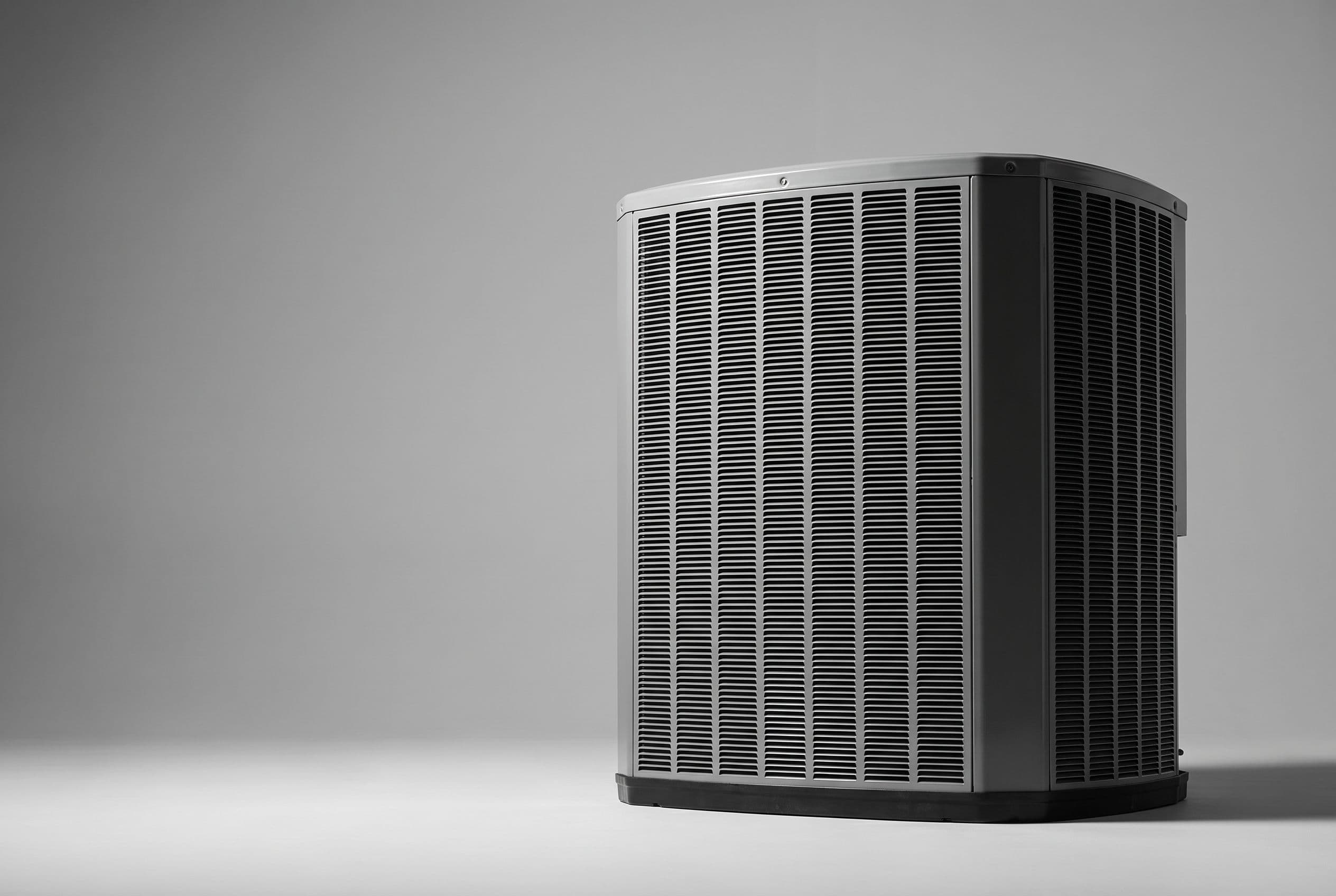
Studio photograph of Trane and Mitsubishi heat pump outdoor units

The Mitsubishi Electric Trane joint venture, and what it doesn't cover

The connection is real. In 2018, Trane's then-parent company Ingersoll Rand and Mitsubishi Electric Corporation formed Mitsubishi Electric Trane HVAC US LLC, known as METUS, as a 50/50 joint venture. The joint venture is a matter of public corporate record (Wikipedia's summary, sourced to trade press and SEC filings), and it became operational later that year. That much of the search-intent question "is Trane owned by Mitsubishi" checks out: yes, there is a real, formal, ownership-level relationship between the two companies.

What the joint venture doesn't do is blend the two brands' product lines together. METUS's scope is explicitly limited to ductless, multi-split, and VRF (variable refrigerant flow) systems, the mini-split-style equipment Mitsubishi built its reputation on. Trane's central ducted heat pumps and air conditioners sit outside the joint venture entirely. Ducted means the system connects to the same ducts and vents a furnace or central air system already uses to heat and cool the whole house, and that's the category most homeowners with existing ductwork are actually shopping for. If you're comparing a Trane ducted heat pump to a Mitsubishi mini-split for a home with forced-air ductwork already in place, you're not comparing two flavors of the same corporate product line. You're comparing a Trane-built ducted system to a Mitsubishi-built ductless one, sold through separate business structures that happen to share a parent-level ownership stake in a different product category.

That's worth keeping in mind for the rest of this comparison. The reliability and quality-control records below aren't about the same manufacturing operation wearing two badges. In the ducted space specifically, they're two genuinely different companies, with different supply chains and different histories of the kinds of problems that show up after installation.
Which Trane and Mitsubishi are you actually being quoted?

"Trane" and "Mitsubishi" aren't single products, and the tier a dealer quotes you changes this whole comparison. Before weighing any spec sheet, it's worth knowing which version of each brand you're actually looking at.

On the Trane side, two ducted tiers show up most often:

  • XV20i: Trane's flagship variable-speed ducted heat pump, its highest published efficiency in the ducted lineup.
  • XV19: one step down from the XV20i, still variable-speed, at a lower published efficiency ceiling.

On the Mitsubishi side, the split is by system type, not just tier:

  • The ductless Hyper-Heat lineup: the H2i-branded mini-split heads most homeowners picture when they hear "Mitsubishi," sold as individual wall- or ceiling-mounted zones rather than a single whole-house system.
  • The SVZ ducted line: Mitsubishi's multi-position ducted air handler, paired with a Hyper-Heat-capable outdoor unit, built to connect to the same ductwork a Trane ducted system uses.

If you're comparing ducted-to-ducted for a home with existing ductwork, the real matchup is Trane's XV20i or XV19 against Mitsubishi's SVZ line, not against the ductless Hyper-Heat systems Mitsubishi is best known for. The spec table further down this page keeps those tiers separate for exactly that reason, rather than blending a ductless number in against a ducted one.

Already have a quote?

Get a Jetson price for your home, then have our team walk you through how it compares

Get my price

Between Trane's XV20i and XV19 tiers, Mitsubishi's split between ductless Hyper-Heat and ducted SVZ, and a joint venture that ties the two companies together in one product category but not the other, there's a lot of variability to sort through before a homeowner even reaches a spec sheet. Jetson Air is a single fully ducted, AHRI-certified cold-climate system, not a lineup of tiers to decode, built for the same existing-ductwork homes Trane's XV-series and Mitsubishi's SVZ line are competing for. Trane's and Mitsubishi's real-world reliability records, further down this page, are worth having in view before you weigh Jetson Air's more straightforward shape against them.

The third option
A heat pump system Jetson sizes, installs, and monitors itself

A heat pump system Jetson sizes, installs, and monitors itself

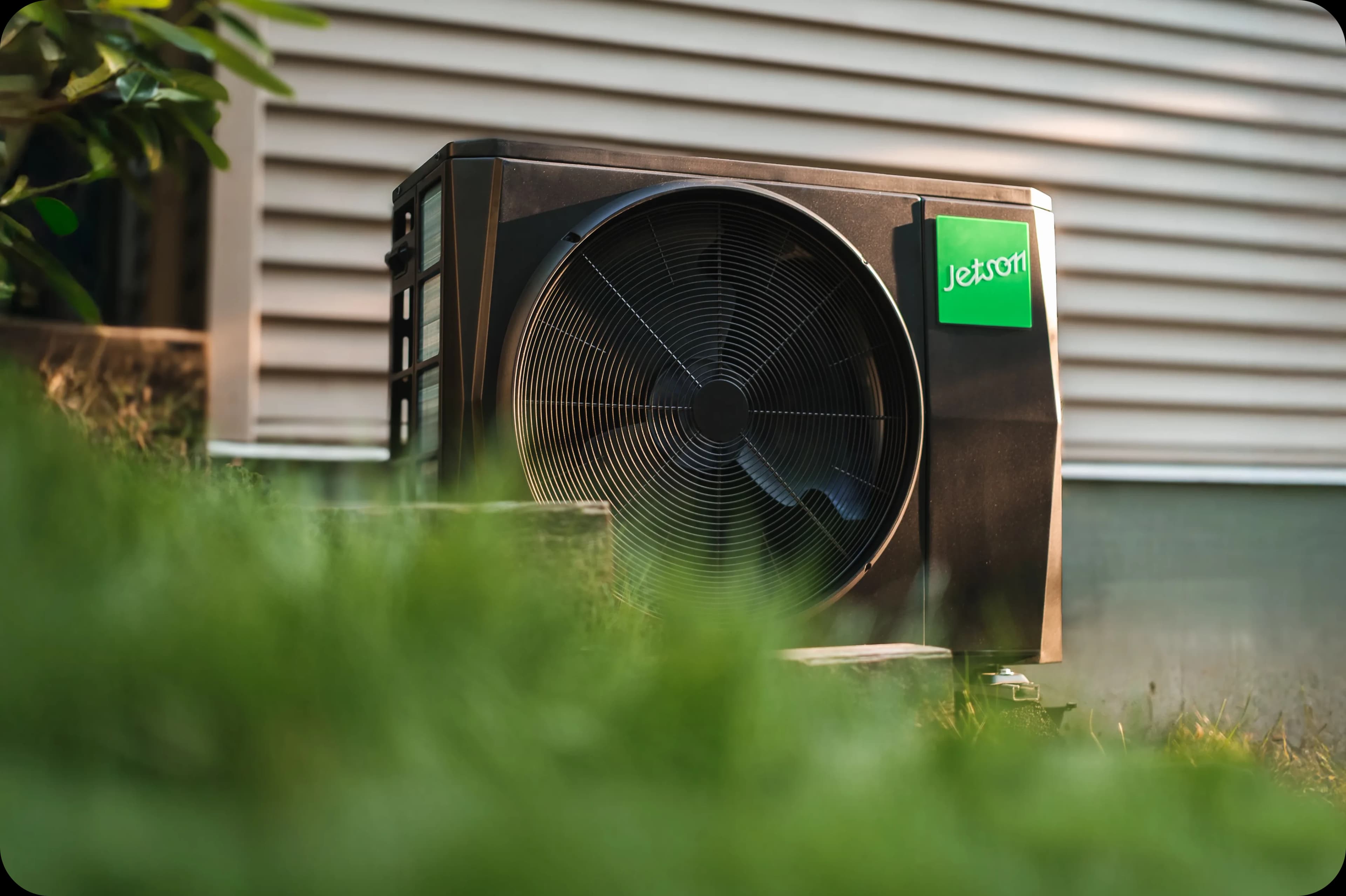
Jetson Air is a fully ducted, cold-climate heat pump system. Jetson partners with a manufacturer for production, then handles sizing, installation, and years of remote monitoring itself, cutting out the layers of distributor and dealer markup that sit between a manufacturer and a homeowner in the traditional model. It's built and rated for cold-climate performance, engineered to keep heating well below zero degrees rather than leaning on backup heat once temperatures drop.

TIME's Best Invention 2025
At a glance

Jetson Air, Trane, and Mitsubishi: the quick comparison

Trane and Mitsubishi numbers reflect the ducted tiers named above (XV20i/XV19 and SVZ); Jetson Air is a single system.

Jetson Air
Trane
Mitsubishi
System type
Central ducted only
Central ducted heat pumps (XV20i, XV19)
Ductless Hyper-Heat mini-splits, plus SVZ ducted air handlers
Cold-climate floor
-22°F, rated and certified
-10°F
-13°F (Hyper-Heat rated)
Ductless option for rooms without ducts
Not offered
Not offered
Yes, the ductless Hyper-Heat lineup
Install
Jetson's own crews, not a subcontracted dealer
Nationwide independent dealer network
Where you can get it
A handful of North American markets so far
Nationwide
Nationwide
Sizing method
Calculated from real usage data, NREL-validated
Estimated by the selling dealer
Ongoing monitoring
24/7 remote monitoring, standard
Varies by dealer and thermostat
Get your own instant price

See if Jetson Air is available at your address

Check availability

Here's the real-world reliability record behind the numbers above, starting with Trane.

Trane's real factory quality-control complaints

Trane markets itself as the premium option, "The Guy" of American HVAC, and that reputation is exactly what makes a live r/HVAC thread titled "Why is Trane like this?" worth reading closely. The thread, started by a working HVAC tech posting as u/CuratorXethia, picked up roughly 120 upvotes and 75 comments, mostly from other technicians comparing notes:

  • u/CuratorXethia, the original post, on brand-new condensers: "I'm getting mighty upset with Trane. They're supposed to be The Guy®️. The 'Top of the Line.' I can't count how many factory caused leaks I've found on these condensers this past summer. What the hell is going on inside their factories? If you're gonna cross your tubes that close to each other, is it really that hard to put some rub protection in there? Is it really that hard to just... Not make the tubes touch?"
  • u/PapaBobcat, describing a compressor swap where the leak didn't surface until a pressure test well above normal operating range: "Did a compressor swap and it wasn't until it was above 300 PSI AND it was vibrating did the leak appear. Sorry customer, I tested to design max and it ran fine for a week."
  • u/Typical_Action_7864, on what the pattern means for Trane's premium pricing: "I think the point is.. you shouldn't have to fix issues like this on a new system. Their QA department should be addressing these types of manufacturing problems if they want to market themselves as a premium brand. Why pay the premium? Might as well buy a Goodman if it's gonna be the same."

This is a specific factory-assembly issue, not a vague sense that "the brand isn't what it used to be": refrigerant lines (the copper tubing that carries refrigerant, the fluid that moves heat, between the outdoor unit and the indoor coil) routed close enough together, without adequate rub protection, that vibration over time wears through the copper and causes a leak, on units that were installed correctly and hadn't been damaged in the field. Whether or not you'd actually choose a budget brand over Trane, u/Typical_Action_7864's logic holds: a premium price is supposed to buy fewer of exactly this kind of factory-floor defect, not the same rate of them at a higher cost.

More documented Trane quality issues

A separate, earlier defect: the 2020 class-action settlement

This isn't the only documented Trane quality issue, and it's worth being precise that it's a different one from the thread above:

  • In 2020, Trane and its then-parent American Standard finalized a nationwide class-action settlement covering roughly 500,000 residential air conditioners and heat pumps, mostly built between November 2013 and September 2014.
  • The defect was an unapproved rust inhibitor that caused sticky deposits inside the expansion valve and led to failures.
  • The settlement won final approval in the District of New Jersey in August 2020.

That's a formally litigated, formally resolved defect on older-vintage equipment, a different failure mode from the refrigerant-line-rub complaints techs are reporting on newer condensers today. Both are real; conflating them would overstate the case against Trane's current production, but taken together they're two separate, documented episodes of factory-level QC trouble over time.

What broader complaint databases show

  • Top Class Actions, in a piece by Kim Gale, counts over 200 BBB complaints against Trane, with homeowners describing repeat evaporator-coil failures and the cost of replacing them.
  • A longtime servicer identified in that piece as Kevin L. is quoted saying: "I've been in the business for 44 years... I too can no longer recommend Trane." That's one voice, not a survey, but a technician with that much tenure walking away from a brand is a meaningful data point.
  • Today's Homeowner's Trane review says its reviewer read through more than 100 customer reviews across BBB, Trustpilot, and Google and came away with "many negative reviews and few positive ones," though the piece doesn't publish star counts or percentages to back that up, so it's worth weighting lightly next to the more specific sourcing above.

Mitsubishi's ductless reliability: what leak complaints actually show

Mitsubishi's mini-splits get a fair number of leak and staining complaints in HVAC forums too, and it's worth looking at one closely because the pattern is genuinely different from Trane's factory-rub issue above. A long-running thread on HVAC-Talk, started by a user posting as jbrew back in October 2016, describes blue staining and a suspected refrigerant leak on two of seven Mitsubishi mini-split heads, about two years after installation. The thread ran to 14 replies across 10 participants and has since picked up over 22,000 views, a sign the symptom is common enough that people keep finding the thread through search.

What makes it a useful counterpoint is how the other technicians in the thread converge on a cause:

  • Posters including syndicated, martyinlincoln, HVAC_Marc, GenesisRefrig, and jacob-k point to improperly insulated line sets (the copper tubing running between the indoor and outdoor units), copper corrosion, and poor condensate management, all installation-quality issues rather than something wrong with the equipment as it left the factory.
  • The blue-green staining they describe is a symptom generally recognized in the HVAC trade as formicary corrosion, a slow, pitted corrosion pattern that shows up when moisture and airborne contaminants reach bare copper, usually because a line set wasn't sealed and insulated correctly.
  • The thread's posters didn't use that specific term themselves, but the fix they landed on, better sealing and insulation at the line set, is the standard remedy for it.

That distinction matters for how you weigh Mitsubishi against Trane on reliability. The Trane thread above is techs blaming the factory: crossed refrigerant lines with no rub protection, a problem baked into the unit before it ever reaches a jobsite. The Mitsubishi thread is techs blaming the install: a line-set insulation or sealing mistake that would produce the same blue-stain, slow-leak symptom on almost any ductless brand if the installer cut the same corner. Ductless systems have more field-run refrigerant line to install correctly than a packaged ducted condenser does, which is part of why installation quality shows up as a bigger swing factor for mini-splits generally. None of this means Mitsubishi hardware is flawless, but the complaints in the wild skew toward "who installed this and how" rather than "what left the factory," a meaningfully different risk profile.

What changes when you buy from Jetson

The refrigerant-line defect above is a factory problem, and it's a real reminder that who builds and installs a system matters as much as the brand name on it. Jetson designs the system, the sizing process, and the software around it, and skips the distributor-and-dealer chain that normally stacks markup onto the price, the same reason buying direct from Costco costs less than going through a middleman. Every install is handled by Jetson's own trained crews, not a subcontractor or whichever dealer won the sale. That means one company is accountable for the design, the install, and the support afterward, instead of a manufacturer's parts warranty and a separate independent dealer's labor terms. A traditional buyer still deals with exactly one installer, same as a Jetson customer. The difference is how many markups got added before the quote reached you, not how many people you have to coordinate with.

A few concrete differences show up once you're comparing actual installs:

  • Sizing: calculated from real usage data using Jetson's own sizing methodology, validated against benchmarks from NREL, the National Renewable Energy Laboratory, the same government lab that runs independent efficiency testing, instead of a traditional Manual J load calculation (the industry-standard, room-by-room sizing worksheet many contractors fill out by hand) or a generic square-footage rule of thumb, aiming to size the system to how a specific home actually performs rather than a rough estimate.
  • Install speed: Jetson's own crews complete the install, typically in a single day, rather than handing it off to whichever independent dealer happened to win the sale. Every install carries a standard parts-and-labor warranty, and an optional plan, Jetson Care Plus, is available at the time of install for meaningfully longer coverage on both parts and labor.
  • Ongoing monitoring: once the system's running, it stays connected. Jetson's remote monitoring watches system health 24/7, so a developing issue is more likely to be flagged early, often cleared remotely or resolved with a quick guided step like power-cycling the outdoor unit's breaker, rather than going unnoticed until something breaks. Support tries the remote fix first and reaches out by email or text with that step; if it resolves things, there's no truck roll. If it doesn't, or if it's a serious case like no heat, a refrigerant leak, or flooding, staff escalate fast to sending a real technician rather than cycling through more remote troubleshooting.
  • Rebates: Jetson also files the rebate paperwork on the homeowner's behalf, rather than leaving it for the homeowner to chase down after the install is done.
  • Quote: instead of waiting for a dealer to schedule an in-home visit and call back with a number, you can get a real quote online in minutes just by entering your address.

Jetson only installs central ducted systems, the same category as a Trane heat pump and the closest match to what most existing-ductwork homes need, not the ductless mini-splits Mitsubishi is known for. It's also currently available in a handful of North American markets rather than nationwide, worth checking before getting attached to the idea.

Jetson Air keeps improving after install

That same remote connection that watches for problems after install is also what lets Jetson Air improve over time, the way a phone gets better through software updates rather than staying frozen at the spec sheet from the day it was bought. In July 2026, Jetson rolled out Air Quality Monitoring to every existing customer automatically, no new hardware required, because the sensors were already built into the system. As Jetson co-founder and CEO Stephen Lake put it, that kind of update means "thousands of existing homes will receive a new feature they didn't have when the equipment was installed, something no other central heat pump system can do." Separately, Jetson Air was named one of TIME's Best Inventions of 2025, announced months before this rollout. None of that changes the hardware numbers, though, so here's exactly how the two systems compare spec for spec.

Jetson Air, Trane, and Mitsubishi side by side

Trane and Mitsubishi numbers are named by tier since both sell more than one product; Jetson Air is a single system.

Jetson Air
Trane
Mitsubishi
System type
Central ducted only
Central ducted heat pumps and A/C (XV20i, XV19, and other tiers)
Ductless Hyper-Heat mini-splits/VRF, plus SVZ ducted air handlers
SEER2 (cooling efficiency)
17
20.0 (XV20i) / up to 19.5 (XV19)
Varies by model (ductless Hyper-Heat) / 17.10 (ducted SVZ)
HSPF2 (heating efficiency)
9.4
10.5 (XV20i) / 9.2 (XV19)
Varies by model (ductless Hyper-Heat) / 9.2 (ducted SVZ)
EER2
10.8
12.7 (XV20i) / not published for XV19
Varies by model (ductless Hyper-Heat) / 12.4 (ducted SVZ, SVZ-KP18NA/SUZ-KA18NAHZ)
Cold-climate floor
-22°F, rated and certified
-10°F (both XV20i and XV19)
-13°F rated Hyper-Heat operation (both ductless and SVZ-paired systems)
ENERGY STAR Cold Climate certified
Yes (also ENERGY STAR Most Efficient)
Yes, XV20i; verify the specific tier you're quoted
Yes for most Hyper-Heat ductless systems; varies by exact SVZ/condenser pairing
Sizing method
Sized from real usage data, Jetson's NREL-validated methodology
Estimated by the selling dealer
Install
Jetson's own install crews, typically one day
Independent dealer network
Remote monitoring
24/7 remote monitoring with proactive alerts
Varies by dealer and thermostat, not standard
Rebate paperwork
Filed by Jetson
Homeowner's or dealer's responsibility

If you want a deeper look at Mitsubishi specifically, including its ductless Hyper-Heat lineup, our Jetson Air vs. Mitsubishi comparison covers it in full. And if Trane and Mitsubishi aren't the only brands on your list, our full roundup of the best heat pumps lines up the rest of the field on the same real-numbers basis.

Skip the joint-venture confusion

See what a heat pump sized for your own home actually costs

Check availability

So which one should you actually buy?

Trane's dealer network reaches almost anywhere in the country, and Mitsubishi's ductless mini-splits are a genuinely strong option for rooms without ductwork. But for a home with existing ductwork, both ducted lineups fall well short on cold-climate rating: Jetson Air holds to -22°F, against -10°F for Trane's ducted flagships and -13°F for Mitsubishi's SVZ line.

Beyond the hardware, Jetson designs, sizes, installs, and monitors the system as one company, with no distributor or dealer markup stacked into the price, and backs it with 10 years of parts and labor through Jetson Care Plus. For homeowners with existing ductwork who want a whole-home heat pump without gambling on which dealer installs a Trane or Mitsubishi system, Jetson Air is worth comparing directly against your own Trane or Mitsubishi quote. Enter your address and you'll know in minutes whether it's available at your house and how much it costs, no dealer visit or callback required.

2,000+ systems installed and counting
See if Jetson Air is available at your address
No dealer visit, no callback
Get your own numbers in minutes
Check your address

Ready to make the switch?
Let's get started!

Explore Jetson Air