Still have questions?

Talk directly with a Jetson Expert to learn more.

Fujitsu Heat Pump Reviews: Reliability Issues to Know About

Fujitsu's ductless mini-splits, wall-mounted units with no ducts that heat and cool just the room they're in, solve a different problem than Jetson Air's whole-home ducted system, which runs through the same vents a furnace or central air system already uses. Here's what real installer forums and owner reports say, and where each one actually fits.

Fujitsu is a legitimate, well-regarded ductless mini-split brand with genuinely strong cold-climate heating performance, but its reliability record is decidedly mixed, with recurring reports of coil corrosion and refrigerant leaks across independent owner and installer sources. This page digs into that record in detail, and how it compares to Jetson Air, the direct-to-homeowner heat pump built, sized, and installed by one company end to end, with no dealer markup and a warranty that covers labor as well as parts.

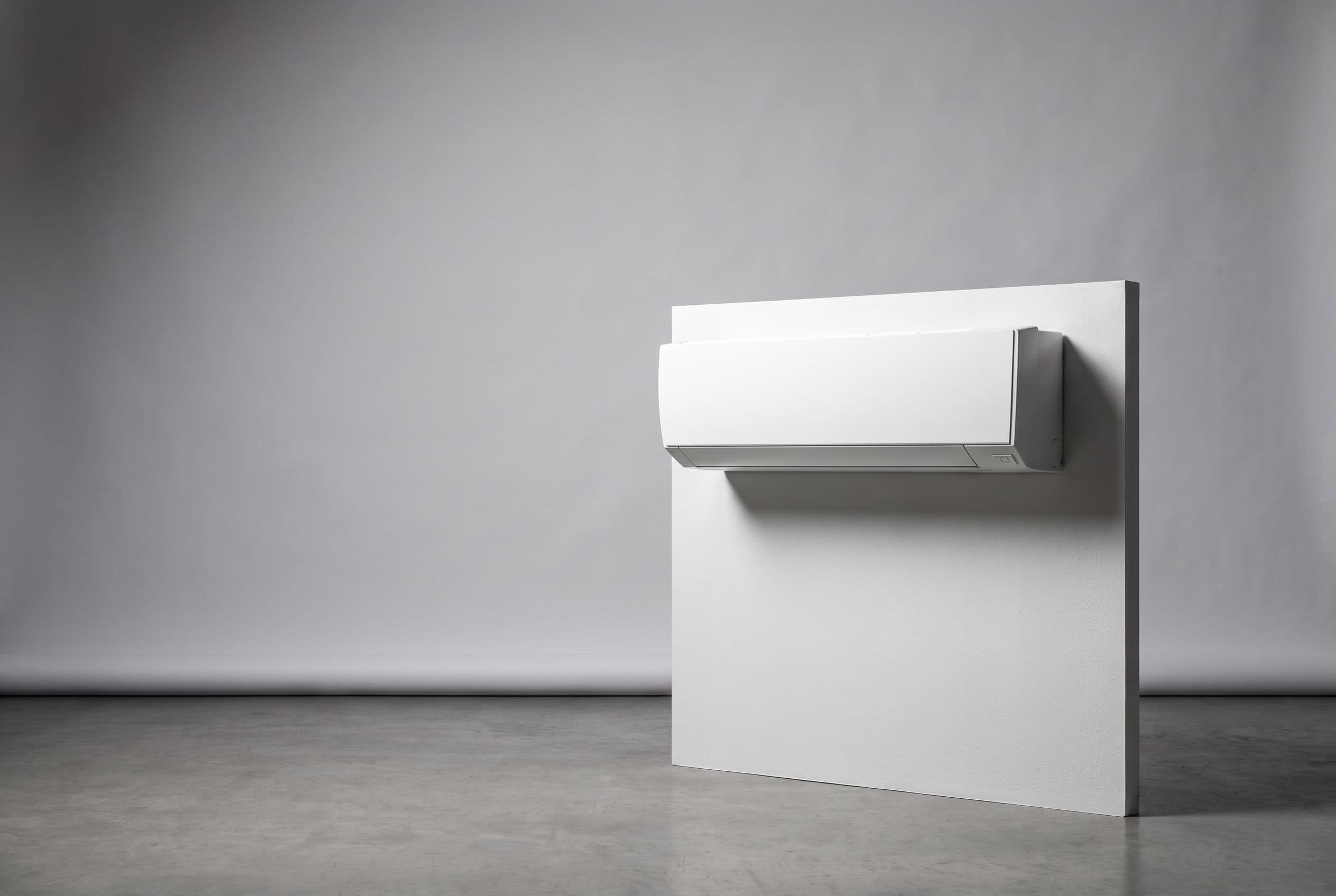
Studio photograph of a Fujitsu heat pump outdoor unit

What Fujitsu Actually Sells: Which Model Are You Actually Being Quoted?

Here's the plain-language version, because the model names get confusing fast: Fujitsu's ductless business is built around units that heat and cool one room, a few rooms, or an addition, not a whole house through ducts the way most Americans picture central heating and cooling. If you're comparing Fujitsu to a whole-home ducted system like Jetson Air, you're already comparing two different categories of equipment, not two versions of the same thing.

Fujitsu's Halcyon line (its residential and light-commercial mini-split family, separate from the commercial Airstage VRF line built for large buildings) breaks down into:

  • Single-zone wall-mounted heads - one indoor unit for one room
  • Multi-zone systems - several indoor units running off one outdoor condenser, so a few rooms can run independently
  • Slim ducted cassettes - for one or two rooms only, not whole-home ductwork

Within Halcyon, Fujitsu's outdoor units really split into two different product lines, not one continuum, and it matters a lot which one you're actually being quoted:

  • Efficiency-focused: the AOUH18KWAS2 (18,000 BTU, R-32 refrigerant) is rated up to SEER2 22.0 and HSPF2 10.5 when paired with non-ducted indoor heads, and closer to SEER2 19.0 with ducted indoor units. Strong efficiency numbers, but it's only rated to heat down to 5F.
  • Cold-climate-focused (XLTH): XLTH is Fujitsu's cold-climate performance designation, not a refrigerant type, so it doesn't tell you on its own which refrigerant generation a given unit uses. Units like the AOUH30LUAH1 (SEER2 18.8, HSPF2 9.7, EER2 11.7) and AOU36RLXFZH (SEER2 20.5/19.25/18.0 and HSPF2 9.5/9.1/8.7 across its non-ducted, mixed, and ducted pairings) actually hold Fujitsu's -15F cold-climate floor, at somewhat lower efficiency than the AOUH18KWAS2's best-case numbers.

Real-world quote data backs up which of these homeowners actually end up buying. A Reddit r/heatpumps community spreadsheet of 1,275+ self-reported quotes shows the AOUH30LUAH1 (7 occurrences, the most of any single Fujitsu model in that data) and the AOU36RLXFZH (6 occurrences) show up more often than the flagship AOUH18KWAS2. That's a reassuring sign: homeowners getting quoted these cold-climate-focused models more often than the efficiency flagship likely means better real-world cold-climate coverage on the systems people actually end up buying.

Fujitsu's ductless lineup is also mid-transition between two refrigerant generations right now: some newer units run on R-32 (the fluid inside the system that actually carries heat in and out), part of an industry-wide shift away from the older R-410A that every major manufacturer has had to make, while other current models, including some XLTH units, still run R-410A. A lot of what gets quoted online, including the older AOU18RLXFZH H-series unit, ran the previous R-410A refrigerant and is now discontinued, so a spec sheet you find for that model number isn't what's actually shipping today.

The practical takeaway: ask your installer for the exact outdoor unit model number before you compare spec sheets, not just the Halcyon or XLTH name on the box. With that settled, the more useful question is how this equipment has actually held up for the people who own and install it.
Already have a quote?

Get a Jetson price for your home, then have our team walk you through how it compares

Get my price

That variability is exactly the problem Jetson Air is built to solve. Instead of a lineup where the tradeoff between efficiency and cold-climate performance depends on which outdoor unit an installer happens to quote you, Jetson designs the system, the software, and the sizing itself, then partners with a single manufacturer to build to one fixed spec. Every Jetson Air system carries the same rated SEER2 17, HSPF2 9.4, and -22F cold-climate floor, no matter which installer sells it or where in the country it ships. That doesn't make equipment risk disappear just because one company owns the design, and the coil-leak reports further down this page are worth reading with that in mind, but it does mean the question of which version you're actually getting has one answer instead of several.

A whole-home ducted alternative
Meet Jetson Air

Meet Jetson Air

Jetson Air is a whole-home, ducted heat pump system, sized for your house from real data, installed in a single day by Jetson's own crews, and backed by remote monitoring that watches system health around the clock. It's rated SEER2 17, HSPF2 9.4, and EER2 10.8 (EER2 is a related cooling-efficiency rating measured on a single hot day rather than a full season), and it keeps producing heat down to -22F (listed under AHRI #217429780, the certificate number from the industry group that verifies these ratings; ENERGY STAR Cold Climate certified).

TIME's Best Invention 2025
At a glance

Jetson Air vs. Fujitsu: the short version

Here's the summary; the full spec breakdown, including exact SEER2 and HSPF2 figures by model, is later in this article.

Jetson Air
Cold-climate rated floor
-22F, AHRI-certified
Room-by-room zoning without ductwork
No, whole-home ducted system only
System sizing
Sized from real home data (NREL-validated)
Install
Single day, Jetson's own crews
Remote system monitoring
24/7, built in
Parts-and-labor warranty
10 years with Jetson Care Plus
Get your own instant price

See if Jetson Air is available at your address

Check availability

The efficiency numbers above only describe the compressor under lab conditions; the coil issue below is a separate, real-world reliability question worth reading on its own terms.

The Coil Leak Question

The most specific complaint that comes up about Fujitsu mini-splits, across more than one independent source, is refrigerant leaks from corroded indoor coils (the coil is the tubing inside the unit that the refrigerant flows through), sometimes only a few years into a system's life.

  • r/HVAC: One commenter called it close to universal: "Yes, this is very normal for fujitsu. Leaking indoor coils its kind of their thing." Another reported an identical failure: "I have same exact problem going to see if I can get new unit under warranty. Paid way too much money for this to happen. Will never consider Fujitsu again."
  • GreenBuildingAdvisor: A homeowner reported that two of three Fujitsu Halcyon indoor units in their home developed refrigerant leaks within four to five years. Commenters point to a documented failure mechanism called formicary corrosion (tiny pinhole leaks that form in copper coils when organic acids attack the metal) and tie it to Fujitsu's older hygroscopic POE refrigerant oil, which absorbs moisture over time and turns acidic. One summarized it plainly: "Fujitsu had coil leak issues. This was common knowledge."
  • GreenBuildingAdvisor, a separate thread: Focused mostly on Mitsubishi with a Fujitsu ProCore mention, this thread includes a self-identified HVAC service professional pushing back on the idea that this is a Fujitsu-only problem: formicary corrosion shows up "in all manufacturers copper coils," he wrote, blaming thinner, lower-quality copper industry-wide rather than any single installation detail. Another commenter agreed: "The problem is not spray foam. It is poor quality control."
  • r/hvacadvice: A reminder that not every case is a failure. Looking at a photo of a corroded coil, one commenter wrote: "There's nothing wrong with the rust and does not need replacing unless the coil itself is leaking, everything is fine as is," with another agreeing it "looks about normal."

Put together, here's where that leaves things: Fujitsu coil leaks are a real, repeatedly reported issue, but the specific cause is disputed among the people who actually work on this equipment, and not every case of coil corrosion means the unit is failing.

What Installers and Owners Report

  • r/heatpumps: A homeowner reported two Bosch heat pumps failing within hours of each other at 13F, while their Fujitsu system kept running without issue: "my Fujitsu 18RLXFZH is pumping away in the basement without a hitch," they wrote, adding they were "shocked" the Bosch units failed at a temperature that shouldn't have challenged them.
  • HVAC-Talk: Several named contractors, asked to pick between Bosch and Fujitsu, came down clearly on Fujitsu's side for cold-weather reliability. "Personally I'd trust the Fujitsu over the Bosch," wrote one; "I would take the Fujitsu any day. The cold weather heating performance should be better," wrote another.
  • Tom Trecock, Install Manager at Endless Energy, a licensed Massachusetts HVAC contractor, wrote a detailed, dated account of why his company stopped installing Fujitsu systems: roughly one in three Fujitsu systems his crews installed starting in Q3 2023 had an out-of-box mechanical issue, mostly control board and fan failures. He also reports slow warranty and technical support (one of his technicians waited two full days for a callback on an active issue), and that Fujitsu told his company no air handlers would be available for summer 2025 because of the industry-wide shift to R-32 refrigerant.
  • HeatPumpGuide owner reviews split cleanly: one reviewer, Gina, reports her Fujitsu minisplit "worked great," even though it cost more than alternatives she considered; another, Glenmore, reports the opposite: "Worked great for 18 months, then quit... at this point I cannot recommend."
  • Today's Homeowner confirms the basic warranty and spec facts that aren't in dispute: Fujitsu backs its systems with a 5 to 10 year parts-and-labor warranty and rates its cold-climate units down to -15F, solid numbers for ductless equipment, even if that source doesn't get into first-hand reliability detail.

Two patterns hold up across all of this: installers and owners consistently rate Fujitsu's cold-weather heating performance highly, and quality-control complaints, especially control-board and fan failures and slow warranty support, show up more often in accounts dated from 2023 onward.

What changes when you buy from Jetson

Coil failures and slow warranty turnaround like the ones above usually trace back to the install and support chain behind a system, not just the hardware. Jetson designs the system and the sizing process directly, skips the distributor-and-dealer chain that normally stacks markup onto the price, the same reason buying direct from Costco costs less than going through a middleman, and its own trained crews, not a subcontracted team, handle the install. That means one company is accountable for the design, the install, and the support afterward, instead of a manufacturer's parts warranty and a separate independent dealer's labor terms. A few concrete differences show up once you're comparing actual installs:

  • Sizing: a traditional installer often sizes a system off a rule of thumb or a quick walkthrough; Jetson sizes every system from real data about your specific home, using its own NREL-validated methodology (benchmarked against modeling standards from the National Renewable Energy Laboratory, a U.S. Department of Energy research lab), rather than a generic square-footage estimate.
  • Install speed: done in a single day, by Jetson's own crews rather than a subcontracted install team.
  • Ongoing monitoring: remote monitoring watches system health continuously, so a developing issue is more likely to be flagged early, often cleared remotely or resolved with a quick guided step like power-cycling the outdoor unit breaker, and escalated straight to a technician if it doesn't resolve.
  • Rebates: Jetson handles filing for available rebates as part of the purchase, which for a whole-home system can be a meaningful part of the total cost.
  • Quote: enter your address online and get a real, sized quote in about two minutes, instead of waiting for a dealer to schedule an in-home visit and call you back.

Jetson Air keeps improving after install

That same remote connection that watches for problems after install is also what lets Jetson Air improve over time, the way a phone gets better through software updates rather than staying frozen at the spec sheet from the day it was bought. In July 2026, Jetson rolled out Air Quality Monitoring to every existing customer automatically, no new hardware required, because the sensors were already built into the system: customers who'd already had their system installed could suddenly see an air quality score for their home right in the Jetson app, a feature they didn't have on day one. As Jetson co-founder and CEO Stephen Lake put it, that kind of update means "thousands of existing homes will receive a new feature they didn't have when the equipment was installed, something no other central heat pump system can do." Separately, Jetson Air was named one of TIME's Best Inventions of 2025, announced months before this rollout. None of that changes the hardware numbers, though, so here's exactly how the two systems compare spec for spec.

Fujitsu vs. Jetson Air: Side by Side

Fujitsu Halcyon figures reflect its efficiency-focused AOUH18KWAS2 outdoor unit (18,000 BTU, R-32); Fujitsu XLTH figures reflect the AOUH30LUAH1 cold-climate outdoor unit. Both vary depending on which indoor unit they're paired with. Jetson Air figures reflect the HP-48 system, AHRI-certified (#217429780).

Fujitsu Halcyon (efficiency line, e.g. AOUH18KWAS2)
Fujitsu XLTH (cold-climate line, e.g. AOUH30LUAH1)
Jetson Air (whole-home ducted, HP-48)
SEER2
19.0-22.0, varies by indoor pairing
18.8
17
HSPF2
Up to 10.5, varies by indoor pairing
9.7
9.4
EER2
Not published for this unit
11.7
10.8
Cold-climate floor
5F
-15F
-22F
ENERGY STAR Cold Climate certified
Not confirmed in available spec sheets
Yes (also ENERGY STAR Most Efficient)
System type
Ductless mini-split, one or multiple rooms
Whole-home ducted, one connected system
Warranty
5-10 years parts and labor, varies by unit
10 years parts and labor with Jetson Care Plus
Sizing method
Installer-dependent, typically a rule-of-thumb or walkthrough estimate
Jetson's own NREL-validated methodology, sized from real home data
Install
Independent dealer network
Single-day install by Jetson's own crews
Remote monitoring
Not a standard feature
24/7 monitoring with proactive alerts

If Fujitsu isn't the only brand on your list, our full roundup of the best heat pumps lines up the rest of the field on the same real-numbers basis.

A different way to buy a heat pump

See what Jetson Air looks like for your address, sized and quoted in minutes

Check availability

The Honest Verdict

Fujitsu's ductless lineup is a different category of product than Jetson Air, room-by-room mini-splits rather than a whole-home ducted system, and it's a genuinely strong performer for that job: installers consistently rate its cold-weather heating highly, and even its dedicated cold-climate line only reaches a -15F floor. Jetson Air goes seven degrees colder, rated and certified to -22F, as a whole-home ducted system rather than a room-by-room retrofit.

Beyond the hardware, the real difference is how you buy it: Jetson designs, sizes, sells, installs, and monitors the system as one company, with no distributor or dealer markup stacked into the price, and a warranty that covers 10 years of parts and labor through Jetson Care Plus. For homeowners who want a whole-home ducted system instead of a room-by-room retrofit, Jetson Air is worth comparing directly against your own Fujitsu quote. Enter your address and you'll know in minutes whether it's available at your house and how much it costs, no dealer visit or callback required.

Whole-Home Heat Pumps
See if Jetson Air is available at your address
Still comparing options?

See how Jetson Air compares for a home with existing ductwork

Explore Jetson Air

Ready to make the switch?
Let's get started!

Explore Jetson Air