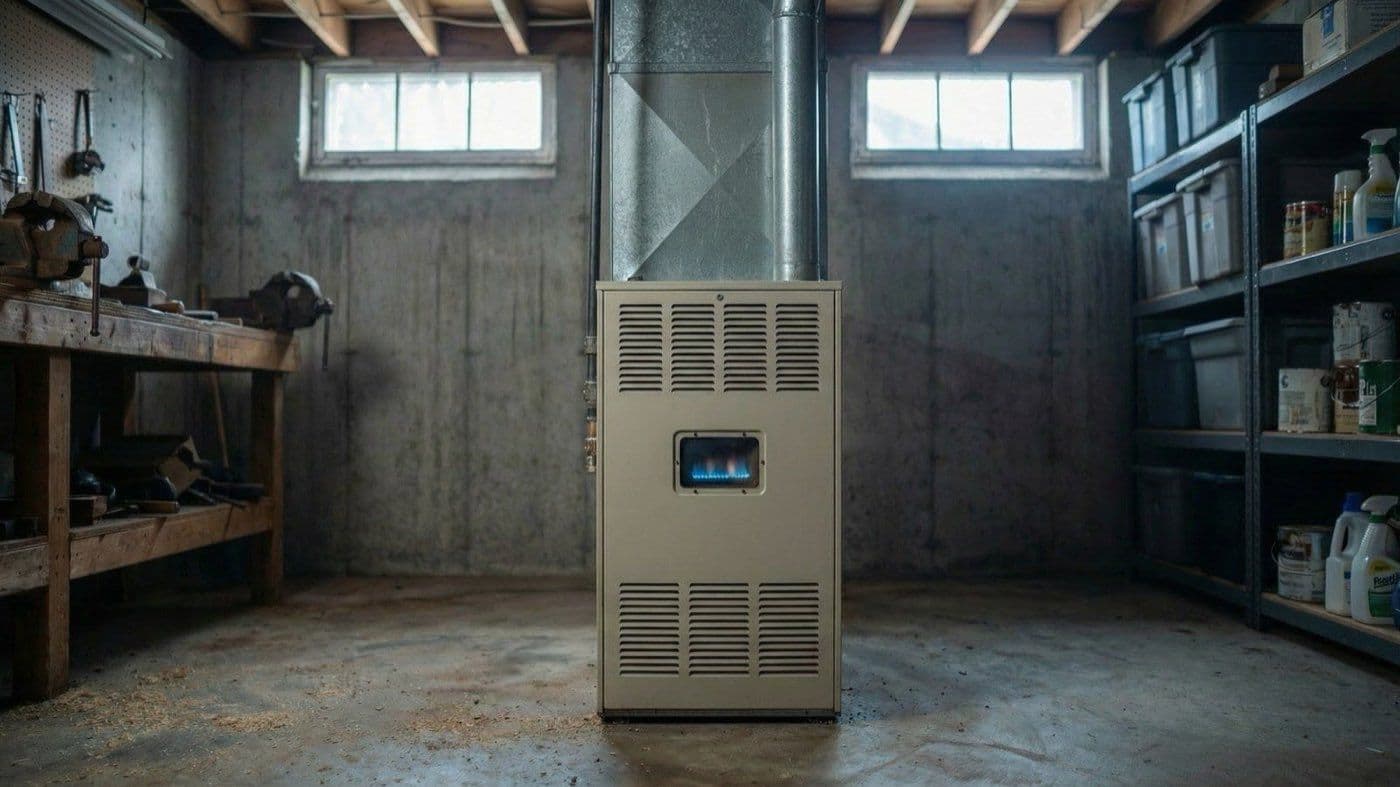
What is backup (auxiliary) heat?
Backup heat, also called auxiliary or emergency heat, is supplemental heating that an installer can add so a heat pump has something to fall back on during the coldest hours of the year. It's usually a set of electric resistance "heat strips," and on a thermostat it tends to show up as an "AUX" or "EM heat" indicator.
Why it exists, and why it's often a crutch
Heat strips were standard on older or undersized heat pumps that lost capacity in the cold. The problem is that resistance heat is expensive to run. It's the same inefficient electric heating that heat pumps are meant to replace. So when a system leans on its backup heat often, that's usually a sign the heat pump was undersized or isn't a true cold-climate unit, not that backup heat is a feature worth paying to run.
How Jetson approaches it
Jetson sizes systems with measured data (see Manual J) and installs true cold-climate equipment, so the heat pump itself carries the home through winter and the strips rarely engage. Here's how Stephen Lake describes it for a cold Canadian market:
"In Ottawa, your heat strip will likely never run." (listen, 42:49)
Not sure whether your home would ever lean on backup heat? Jetson sizes for the cold up front, so see what a properly sized system would cost for your home to see what that looks like for your home. See also how heat pumps work in cold weather.
Common questions
Do I need backup heat? In most homes with a correctly sized cold-climate system, it rarely runs, if it's installed at all. The right size and a real low-temperature rating matter far more than adding strips.
Is "emergency heat" on my thermostat the same thing? Yes. That setting forces the system to heat with the resistance strips instead of the heat pump, which is much less efficient and meant only as a short-term stopgap.
Is backup heat the same as dual fuel? Not quite. Backup heat usually means electric resistance strips, while dual fuel pairs the heat pump with a gas or oil furnace instead. The heat pump vs. dual fuel guide covers that comparison.