Still have questions?

Talk directly with a Jetson Expert to learn more.

Is a Rheem Heat Pump Reliable? Real Reviews and Data

Rheem's cold-climate specs and real owner reviews, and how Jetson Air's direct pricing compares.

A Rheem heat pump is generally reliable equipment, backed by a real DOE Cold Climate Heat Pump Challenge credential and reports of Rheem units logging decades of continuous run time, but real complaints trace more often to sizing and installation than to the compressor itself. This guide breaks down what those reviews and specs actually show, and how it compares to Jetson Air, the direct-to-homeowner heat pump built, sized, and installed by one company end to end, with no dealer markup and a warranty that covers labor as well as parts.

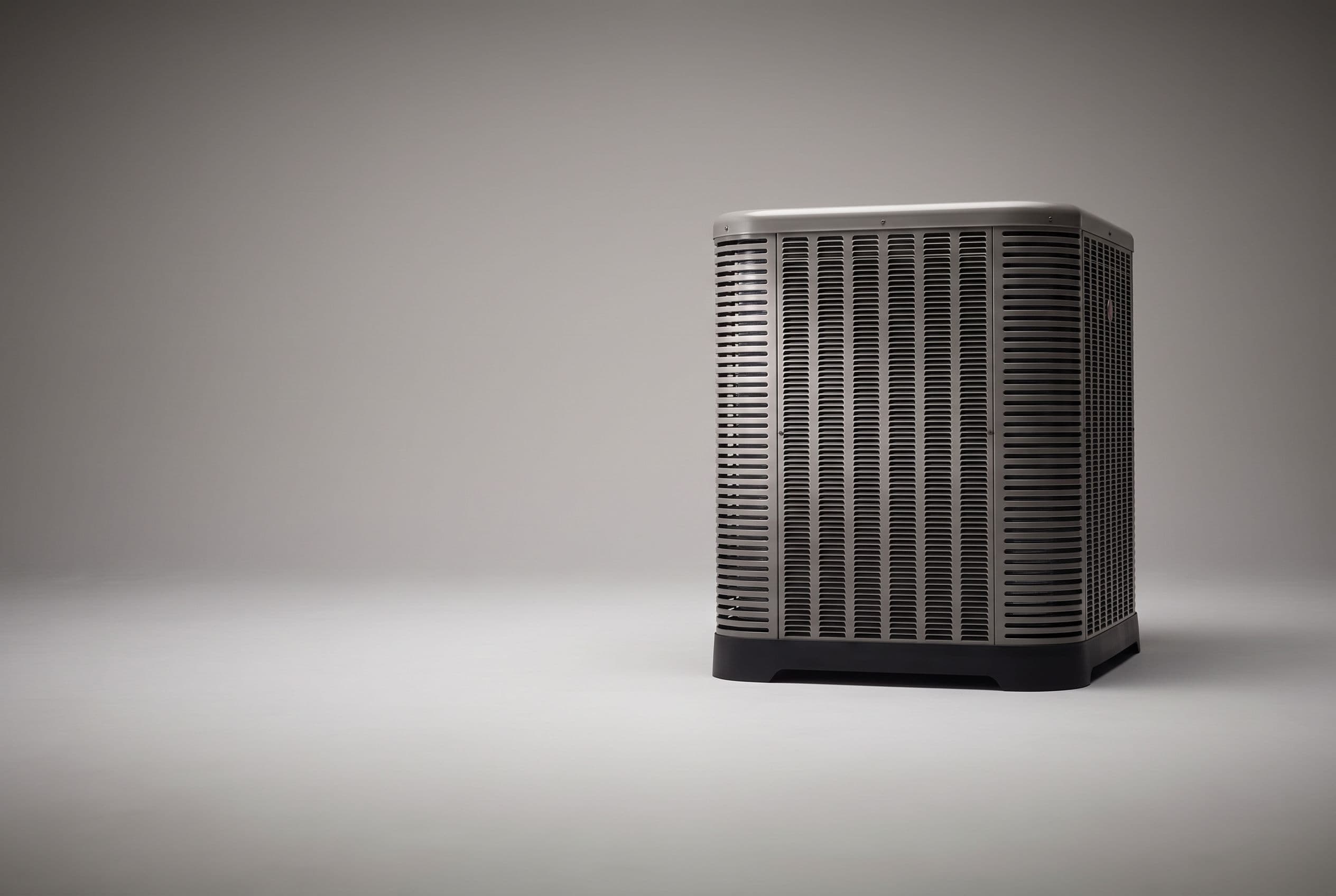
Studio photograph of a Rheem heat pump outdoor unit

Which Rheem are you actually being quoted?

Short answer: "Rheem" isn't one product. The name covers several distinct lines with different specs, different cold-climate credentials, and different price points, and which one shows up on your quote changes the comparison a lot. Before getting into reviews or specs, it's worth knowing which Rheem you're actually looking at:

  • RD17AZ (Endeavor Cold Climate line): Rheem's dedicated cold-climate platform, the one it submitted to the Department of Energy's Cold Climate Heat Pump Challenge and markets as ENERGY STAR certified and "rated as 2024's most efficient, even in cold climates."
  • RP18AZ (Endeavor Prestige): Rheem's higher-efficiency standard line, published at up to SEER2 20, HSPF2 8.5, and EER2 up to 12.5, strong mild-weather and hot-day numbers, though Rheem doesn't publish a cold-climate operating floor for this line the way it does for RD17AZ.
  • RA15AY (Endeavor Classic): Rheem's more standard-efficiency line, the tier most likely to show up as the lower-cost option on a multi-bid quote.

The rest of this page treats the DOE Cold Climate Challenge credential below as specific to the RD17AZ platform, and the head-to-head spec comparison further down as specific to RP18AZ, since that's the line with published SEER2, HSPF2, and EER2 figures to compare against. If your quote names a different model number, ask your installer which of these three lines it actually belongs to before assuming any of the numbers on this page apply.
Already have a quote?

Get a Jetson price for your home, then have our team walk you through how it compares

Get my price

That gap between the headline number and what shows up on your quote is largely a function of how many different products carry the Rheem name, each with its own specs and its own version of an "up to" ceiling. Jetson Air does not have that problem, because there is only one of it. Jetson designs the system, the software that runs it, and the sizing process, then partners with a manufacturer to build it, so the AHRI-certified numbers published for Jetson Air are the same numbers you would actually be quoted, not a ceiling figure borrowed from a different tier or a program benchmark restated as a product spec. Whether that consistency also holds up as a heat pump you can live with is a separate question, and it is worth weighing against what real owners and technicians report about Rheem, covered next.

A direct-to-homeowner heat pump
Meet Jetson Air

Meet Jetson Air

Jetson Air is a ducted heat pump, meaning it connects to the same ductwork and vents a furnace or central air conditioner already uses, rather than the wall-mounted units you'd get with a ductless system. It's cold-climate rated to -22°F and ENERGY STAR Cold Climate certified, with a SEER2 of 17, an HSPF2 of 9.4, and an EER2 of 10.8 (the standard ratings for overall cooling efficiency, overall heating efficiency, and hot-day cooling performance; AHRI #217429780). Jetson designs the system and handles sizing, installation, and monitoring directly, rather than selling through a separate distributor and dealer network.

TIME's Best Invention 2025
At a glance

Jetson Air vs. Rheem, at a glance

This is the short version; a closer model-by-model spec comparison follows further down the page.

Jetson Air
Winter heating efficiency (HSPF2)
9.4 HSPF2, AHRI-certified
Summer cooling efficiency (SEER2)
17
Low-temperature operating floor
-22°F, rated and certified
ENERGY STAR Cold Climate certified
Yes, also ENERGY STAR Most Efficient
Standard warranty
5 yrs parts, 1 yr labor standard (10 yrs both with Jetson Care Plus)
System options
Ducted only
Get your own instant price

See if Jetson Air is available at your address

Check availability

What the DOE Cold Climate Challenge result actually means

Rheem's own press release states its results as relative figures: the unit delivered "9 percent higher HSPF2 than the DOE challenge specification" and "5 percent higher COP during heating at 5 degrees Fahrenheit ambient temperature than the DOE challenge specification." (HSPF2 is the standard rating for how efficiently a heat pump heats a home over a full winter, and COP compares the heat a unit produces to the electricity it takes to make that heat at one specific outdoor temperature; higher is better on both.) It also confirms the unit provided uninterrupted heating at -23°F and held 77 percent of its nominal heating capacity (its rated heat output under standard test conditions) at -15°F, both real, solid numbers for a heat pump running that cold.

The absolute figures that get repeated online, an HSPF2 "up to 8.5" and a COP of 1.5 to 2.0 at -8°C (about 18°F), actually come from pv-magazine's coverage of the announcement, not from Rheem's own release. Worth knowing: the DOE's Cold Climate Heat Pump Challenge program page itself sets a target specification of HSPF2 "above 8.5" as the bar participating manufacturers have to clear. So that 8.5 figure looks like it originates as the DOE's own benchmark, one Rheem met or beat, rather than a number Rheem generated and reported as a standalone marketing claim. It's still a real, sourced figure. It's just describing what the program required more than what one specific model delivers in the field.

There's a second data point worth mentioning, though it comes with a caveat. The retail RD17AZ36AJ3N (rated at 36,000 BTU, the standard unit for measuring heating and cooling capacity) does have real certified performance data circulating from that platform, and Rheem's own marketing lists "up to 8.5" HSPF2 as this line's ceiling. But we couldn't independently re-confirm an 8.5 HSPF2 paired with a 2.30 COP directly against AHRI's own live certification directory (AHRI is the independent industry group that certifies manufacturer efficiency claims), and a manufacturer spec sheet for that same platform we could access shows a COP of 2.30 pairing with a lower HSPF2 (8.1, at a 17°F test point) for one specific air-handler combination, not 8.5 at 5°F. So treat "8.5 HSPF2" as this line's published ceiling across its size range rather than a confirmed number for one specific certified pairing, and don't assume it lines up with the 2.30 COP figure as a matched pair.

Cold-climate performance, in context

Two numbers actually decide whether a heat pump qualifies as cold-climate capable: HSPF2 (heating efficiency across a full winter, not just a mild day) and a stated low-temperature operating floor. A high SEER2 alone tells you almost nothing about cold-weather performance, since SEER2 is a cooling-season number. That's why the DOE built its Cold Climate Heat Pump Challenge around an HSPF2 floor rather than SEER2, and why Rheem's real result there is worth taking seriously as an engineering credential, not just a marketing claim. It also lines up with the spec sheets: Rheem's RP18AZ line beats Jetson Air on SEER2 (up to 20 versus 17) and EER2 (up to 12.5 versus 10.8), both mild-weather and hot-day numbers, while Jetson Air's 9.4 HSPF2, the winter-heating figure, is higher than the 8.5 HSPF2 Rheem's Challenge unit hit.

Jetson Air is built to the same category standard: it's AHRI-certified at HSPF2 9.4 and rated and ENERGY STAR Cold Climate certified to keep producing heat down to -22°F. Rheem's side of that comparison is harder to pin to one number. The DOE result, uninterrupted heating at -23°F and 77 percent of nominal capacity at -15°F, is real, but it's a program result for whatever unit Rheem submitted to the Challenge; no source we found, including Rheem's own newsroom, ties that figure to a specific model number you can actually order. The retail RD17AZ does carry its own real, separate credential: Rheem's press release announcing it states it's "ENERGY STAR® certified" and was "rated as 2024's most efficient, even in cold climates." But neither that release nor Rheem's own RD17AZ product page publishes a specific minimum outdoor heating temperature the way an ENERGY STAR Cold Climate listing or a spec sheet normally would. So treat the -23°F figure as a real DOE program result and the RD17AZ's ENERGY STAR Cold Climate status as a real, separate credential, not as two data points that add up to a published low-temperature floor for the specific unit you'd be quoted.

The DOE test result above is a lab benchmark, not a guarantee of what happens once a Rheem unit is actually running in someone's house.

What real owners and technicians say about Rheem heat pumps

Specs tell you what a unit is capable of in a lab. What you actually live with is a different question, and the answers here are genuinely mixed depending on where you look.

The case for durability:

  • A r/hvacadvice post, which picked up 231 upvotes, shows a dead condenser with the caption: "This Rheem has served us through the hottest virginia heat waves for 27 years... These are some of the most reliable units ever built... It ran 24 hours a day from may to September every year. Never skipped a beat till death." It was running continuously in a restaurant kitchen.
  • A commenter on the same thread backed it up: "I just replaced a 27yo Rheem 3 ton. It served me well thru the Georgia [heat]."
  • A long-running thread on HVAC-Talk, a forum where the people posting are working HVAC contractors rather than homeowners, points the same direction. The site now blocks automated fetching, so this is a secondhand read of what's visible in search indexing rather than a verified quote, worth confirming directly if you want the exact wording. Per that indexing, one veteran contributor described Rheem and Ruud reliability as "very good," said some units "last upwards of 20 years," and named it his brand of choice.

The case for caution:

  • Today's Homeowner's review calls Rheem "budget-friendly yet durable" and notes the brand has been trusted since 1925, but it also documents real complaints, including one customer's account that "in less than 8 months, we've had 2 replacement pieces sent due to the unit malfunctioning." The same review pegs Rheem's typical lifespan at 10 to 15 years, shorter than the 15 to 20 years it attributes to higher-end brands, and lays out the standard warranty: 10 years on parts, 1 year on labor.
  • PissedConsumer, which by design only collects complaints (so treat it as a lower bound on satisfaction, not an average experience), has several dated, named write-ups specifically about Rheem heat pumps rather than water heaters: a homeowner in Edison, NJ reporting an oversized unit and installation failure, one in Greenville, SC describing a heat pump replacement that failed within about 18 months despite seven service visits, and one in Boynton Beach, FL needing a motor and fan replacement shortly after install due to noise.

None of this proves Rheem units generally fail this way. It does show that when a Rheem install goes wrong, it can take multiple visits to sort out, which lines up with a pattern that shows up in almost any brand's complaint history: equipment quality and installation quality are two different variables, and a bad installer can sink a good unit.

What changes when you buy from Jetson

The pattern in those complaints is telling: when something goes wrong, it's often the install itself, not the equipment, that's at fault, handed off to whichever local dealer won the job. Jetson designs the heat pump system, the software that runs it, and the sizing process directly, and skips the distributor-and-dealer chain that normally stacks markup onto the price, the same reason buying direct from Costco costs less than going through a middleman. Its own trained crews handle the install instead of a subcontracted local dealer. That means one company is accountable for the design, the install, and the support afterward, instead of a manufacturer's parts warranty and a separate independent dealer's labor terms.

A few concrete differences show up once you're comparing actual installs:

  • Sizing: done from real data rather than a generic contractor estimate, using Jetson's own NREL-validated methodology (NREL is the federal National Renewable Energy Laboratory, so the approach is checked against real building-science research rather than a rule of thumb), which matters given how many of the complaints above (that oversized unit in Edison, NJ, for instance) trace back to a mis-sized system rather than a bad compressor.
  • Install speed: a single day, done by Jetson's own crews (trained at a dedicated facility in Denver) rather than a subcontracted local dealer, which is part of how Jetson keeps that installer variable in-house instead of handing it off.
  • Ongoing monitoring: remote monitoring watches system health around the clock, and a developing issue is more likely to be flagged early, often cleared remotely or resolved with a quick guided step like power-cycling the outdoor unit's breaker, and escalated straight to a technician if it doesn't resolve or if it's something serious like no heat or a refrigerant leak.
  • Rebates: Jetson handles filing for available rebates as part of the purchase, rather than leaving that paperwork to the homeowner.
  • Quote: enter your address and get a real, sized quote online in minutes, instead of waiting for a dealer to schedule a visit and call you back.

Standard coverage is 5 years on parts and 1 year on labor; Jetson Care Plus, added at install, extends that to 10 years on both parts and labor together. Jetson only installs central ducted systems and is currently available in a handful of North American markets, not nationwide, so the first real question is usually whether it's offered where you live.

Jetson Air keeps improving after install

That same remote connection that watches for problems after install is also what lets Jetson Air improve over time, the way a phone gets better through software updates rather than staying frozen at the spec sheet from the day it was bought. In July 2026, Jetson rolled out Air Quality Monitoring to every existing customer automatically, no new hardware required, because the sensors were already built into the system. As Jetson co-founder and CEO Stephen Lake put it, that kind of update means "thousands of existing homes will receive a new feature they didn't have when the equipment was installed, something no other central heat pump system can do." Separately, Jetson Air was named one of TIME's Best Inventions of 2025, announced months before this rollout. None of that changes the hardware numbers, though, so here's exactly how the two systems compare spec for spec.

Rheem vs. Jetson Air, side by side

RD17AZ figures reflect Rheem's own published cold-climate-line materials; RP18AZ figures reflect its own published Endeavor Prestige specs (up to 20 SEER2, 8.5 HSPF2, up to 12.5 EER2). Confirm the exact model and AHRI number on your own quote, since ratings vary by unit size within each line.

Rheem RD17AZ (Endeavor Cold Climate)
Rheem RP18AZ (Endeavor Prestige)
Jetson Air HP-48
SEER2
Not published in sources we could verify
Up to 20
17
HSPF2
Up to 8.5 (one certified 3-ton pairing shows 8.1)
8.5
9.4
EER2
Not published in sources we could verify
Up to 12.5
10.8
Cold-climate floor
Not published for this model; a related DOE Challenge unit sustained heating at -23°F
Not published for this model
-22°F, rated and certified
ENERGY STAR Cold Climate certified
Yes, per Rheem’s own press release
Not confirmed for this model
Yes (also ENERGY STAR Most Efficient)
System type
Ducted split system
Ducted split system (Rheem also sells ductless)
Ducted only
Warranty
10 years parts, 1 year labor (Rheem’s published standard)
10 years parts and labor with Jetson Care Plus
Sizing method
Local dealer's load calculation
Sized online from real data, NREL-validated methodology
Install
Independent local dealer's crew
Jetson's own crew, single day
Remote monitoring
Not standard
Not standard
24/7, proactive alerts

If Rheem isn't the only brand on your list, our full roundup of the best heat pumps lines up the rest of the field on the same real-numbers basis.

Curious which Rheem tier you were quoted

See how Jetson Air's numbers compare on your own home

Check availability

So which one is right for you

Rheem's DOE Cold Climate Heat Pump Challenge result is a real engineering credential, and its warranty runs a strong 10 years on parts. But the two numbers that actually decide cold-climate performance, HSPF2 and a low-temperature floor, favor Jetson Air: 9.4 HSPF2 versus the 8.5 the DOE unit hit, and a -22°F floor certified for the specific model you'd actually be quoted, something no source ties to a single sellable Rheem model.

Beyond the hardware, the real difference is structural: a Rheem heat pump reaches your house through a distributor and then an independent local dealer, who also installs and answers for it later, while Jetson designs, sizes, sells, and installs the system as one company, with 10 years of parts and labor covered through Jetson Care Plus, closing the labor gap in Rheem's own warranty. For homeowners in Jetson's service area who want a whole-home ducted system without gambling on which dealer they get, Jetson Air is worth comparing directly against your own Rheem quote. Enter your address and you'll know in minutes whether it's available at your house and how much it costs, no dealer visit or callback required.

See what's available at your address
Find out if Jetson Air is offered near you
Still comparing options

See how Jetson Air stacks up for your own home

Check availability

Ready to make the switch?
Let's get started!

Explore Jetson Air