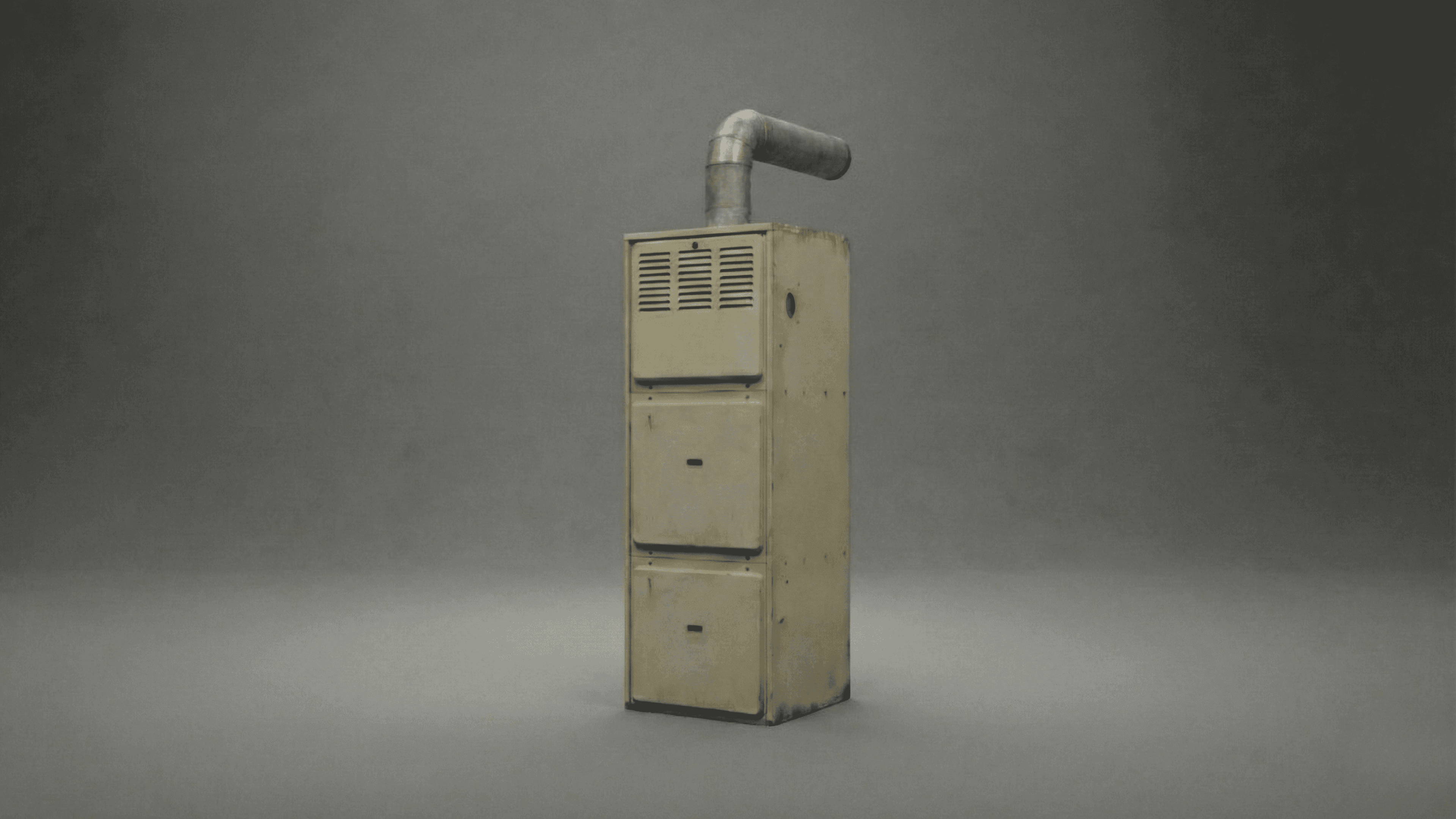
What is the difference between a heat pump and a gas furnace?
A gas furnace burns natural gas to create heat, which gets pushed through your ductwork and into your rooms. It's a combustion process: fuel goes in, heat comes out, and exhaust gases vent through a flue. Even the most efficient gas furnaces top out around 95% efficiency, meaning at least 5% of the energy you're paying for leaves through the exhaust.
A ducted heat pump takes a different approach entirely. Instead of burning fuel to generate heat, it uses a small amount of electricity to move heat from the outdoor air into your home, then distributes it through your existing ductwork. Because it's relocating existing heat rather than generating it from scratch, a heat pump delivers two to five times more heating energy per unit of electricity consumed. That efficiency gap is why heat pumps cost less to operate, even in regions where electricity rates are higher than gas.
The same system also works in reverse during summer, pulling heat out of your home to cool it. So where a gas furnace only heats (and you need a separate air conditioner for summer), a ducted heat pump handles both jobs from a single piece of equipment, through the ductwork you already have.
Heat Pump vs. Gas Furnace at a Glance
| Ducted heat pump | Gas furnace | |
|---|---|---|
| Efficiency | 200–500% (moves heat) | Up to 95% (combustion) |
| Heating and cooling | Both: one system, year-round | Heating only, separate AC needed |
| Installs into ductwork | Yes, uses your existing ducts | Yes |
| On-site emissions | None | Carbon monoxide, nitrogen dioxide |
| Monthly operating cost | Lower, 2–5x more efficient | Higher |
| Works below freezing | Yes, down to –30°C | Yes |
| BC rebates available | Yes: CleanBC, BC Hydro, FortisBC | No |
| Best for | Homes with existing ductwork replacing furnace + AC | Homes without ductwork options |
Should you replace your gas furnace with a heat pump?
For most BC homeowners with an existing forced-air system, replacing a gas furnace with a ducted heat pump is a straightforward upgrade. Modern cold-climate heat pumps operate efficiently down to –30°C, which covers the full range of winter conditions across the Lower Mainland, Fraser Valley, and most of the province. They don't burn anything, they don't produce combustion gases, and they handle both heating and cooling year-round.
The transition is also simpler than most people expect if your home already has ductwork. The heat pump's indoor air handler typically fits right where the old furnace was, and your existing vents keep distributing heat the same way they always have. You're replacing the equipment, not rebuilding the system.
There are also financial reasons to make the switch now rather than later. BC's CleanBC Better Homes program, BC Hydro, and FortisBC all offer rebates specifically for homeowners upgrading from gas to a heat pump. The timing matters: rebate programs have funding limits and can close or change, so homeowners who move earlier tend to capture larger incentives.
Are heat pumps more expensive than a gas furnace?
The upfront cost of a heat pump is sometimes higher than a gas furnace alone, but that comparison is incomplete. A gas furnace only heats your home. You still need a separate air conditioner for summer, which adds its own purchase and installation cost. A ducted heat pump replaces both systems in one unit.
In British Columbia, a complete ducted heat pump installation typically ranges from $8,000 to $15,000 before rebates, depending on system size and your home's electrical setup. When you stack available BC rebates from CleanBC, BC Hydro, and FortisBC, the out-of-pocket cost for eligible homeowners can be reduced significantly.
On the operating side, heat pumps are two to five times more efficient than gas furnaces, so your monthly energy costs drop substantially. Over a 15 to 20 year equipment lifespan, those operating savings typically far exceed any difference in upfront cost. The question isn't really what costs less to install today. It's what costs less to live with over the life of the system.
Comparing the two for your own home comes down to your numbers. You can see your price, savings, and rebates from your address, with no in-home contractor visit.
What's the energy efficiency difference between a heat pump and a furnace?
Heat pumps transfer heat rather than creating it, which is a fundamentally more efficient process. A high-efficiency gas furnace converts about 95% of its fuel into usable heat, which sounds impressive until you compare it to a heat pump that delivers 200% to 500% efficiency. That means for every unit of electricity a heat pump consumes, it moves two to five units of heat into your home.
The reason for this gap is physics. Moving heat from one place to another requires far less energy than generating heat through combustion. A gas furnace can never exceed 100% efficiency because you can't get more heat out of fuel than the fuel contains. A heat pump routinely exceeds 100% because it's not limited by the energy content of its input. It's harvesting heat that already exists in the outdoor air, even on cold winter days.
Do heat pumps work in BC winters?
Yes, and for most of British Columbia, they work very well. The Lower Mainland, Fraser Valley, and South Vancouver Island rarely see temperatures below –15°C, which is well within the operating range of modern cold-climate heat pumps. Even in colder inland BC communities, today's systems are engineered to operate efficiently down to –30°C.
The concern about heat pumps in cold weather is understandable. It was a legitimate criticism of older systems from ten or more years ago, which would lose efficiency as temperatures dropped and often needed backup electric resistance heat to get through the coldest nights. That's not what current cold-climate systems do.
Today's cold-climate heat pumps use inverter-driven compressors that adjust output continuously rather than cycling on and off, refrigerants specifically formulated for extreme cold, and controls that optimize performance in real time. At Jetson, every system we install is a cold-climate system, sized and specified for BC conditions. If you want the physics, see how they pull heat from freezing air, and more on the cold-climate models built for sub-zero temps we install.
What does a ducted heat pump installation look like?
For homes with existing ductwork, a ducted heat pump installation typically takes one to two days. You're replacing the furnace and, if applicable, the central air conditioning with a single system that connects to your existing ducts. Here's more on what a ducted install involves.
Here's what the process looks like with Jetson:
- Home assessment: we evaluate your home's size, insulation, existing ductwork, and electrical panel to recommend the right system for your conditions.
- Equipment selection: we specify the right size and model based on a thermal analysis of your specific home, not rules of thumb.
- Installation day: our licensed technicians remove your old system and install the new heat pump, handling all connections to your existing ductwork.
- Rebate paperwork: Jetson manages the rebate application process for BC Hydro, FortisBC, and CleanBC so you don't have to.
- Commissioning: we test the system and walk you through how it works before we leave.
Frequently Asked Questions
How does a heat pump work differently than a furnace?
A gas furnace burns fuel to generate heat, then pushes that warm air through your ductwork. A heat pump doesn't burn anything. It uses electricity to extract heat from outdoor air and move it into your home, delivering two to five times more heating energy per unit of electricity consumed. In summer, it reverses direction to cool your home the same way an air conditioner does. For the full breakdown, see how a heat pump moves heat instead of burning fuel.
Is a heat pump cheaper to run than a gas furnace in BC?
In most cases, yes. Heat pumps are two to five times more efficient than gas furnaces, so they use significantly less energy to deliver the same amount of heat. BC's electricity rates are relatively stable compared to natural gas prices, which have been volatile. Most BC homeowners who switch from gas to a heat pump see meaningful reductions in their monthly heating costs. We go deeper on whether electricity actually costs more than gas in a separate guide.
Can a ducted heat pump replace my existing furnace?
If your home has existing ductwork, yes. A ducted heat pump's indoor air handler connects directly to your current duct system, so your existing vents continue distributing heat and cooling throughout your home. The installation process involves removing the old furnace and installing the new heat pump in its place, typically a one to two day job.
How much does a heat pump installation cost in BC?
In British Columbia, a complete ducted heat pump installation typically ranges from $8,000 to $15,000 before rebates, depending on system size, home size, and whether any electrical upgrades are needed. BC rebate programs through CleanBC Better Homes, BC Hydro, and FortisBC can reduce the out-of-pocket cost significantly for eligible homeowners. See Jetson's BC rebates page for current program amounts.
Do heat pumps work in BC winters?
Yes. Modern cold-climate heat pumps operate efficiently down to –30°C, which covers the full range of winter conditions across British Columbia, including colder inland communities. The Lower Mainland and Fraser Valley rarely see temperatures that approach the operational limits of current systems. Every Jetson installation uses a cold-climate rated system.
What rebates are available for heat pumps in BC?
BC homeowners replacing a gas furnace with a heat pump can access rebates through CleanBC Better Homes, BC Hydro's heat pump offer, and FortisBC's home efficiency rebate program. These programs can be stacked, and combined with federal incentives where applicable. See Jetson's BC rebates page for current program amounts and eligibility requirements.
Do I need a new electrical panel for a heat pump?
Not always. Many BC homes have sufficient electrical capacity for a heat pump, particularly those currently running a gas furnace with a 200-amp panel. Homes with older or smaller panels may need an upgrade. Jetson evaluates your electrical setup during the quoting process and gives you a clear answer before any work starts. If an upgrade is needed, we handle it as part of the installation.
How long does a heat pump last compared to a furnace?
A well-maintained heat pump typically lasts 15 to 20 years, which is comparable to a gas furnace. Because a heat pump handles both heating and cooling, it also replaces your central air conditioner, so you're getting two systems' worth of useful life from one piece of equipment. Every Jetson system comes with a 10-year parts and labour warranty.