Still have questions?

Talk directly with a Jetson Expert to learn more.

Is Mitsubishi a Good Heat Pump Brand? Ducted vs. Ductless Reviews

Mitsubishi's ductless Hyper-Heat line is genuinely excellent. Its ducted SVZ line is a mixed bag, and that's exactly where Jetson Air's single-source, fixed-price system fits in.

Mitsubishi is a genuinely strong heat pump brand for ductless mini-splits, where installers and independent reviewers rank its Hyper-Heat line among the best cold-climate equipment on the market, but its ducted SVZ lineup draws far more mixed reviews, with installers reporting thinner accessory support and less consistent training than the ductless side gets. Here's how that split holds up under a closer look, and how it compares to Jetson Air, the direct-to-homeowner heat pump built, sized, and installed by one company end to end, with no dealer markup and a warranty that covers labor as well as parts.

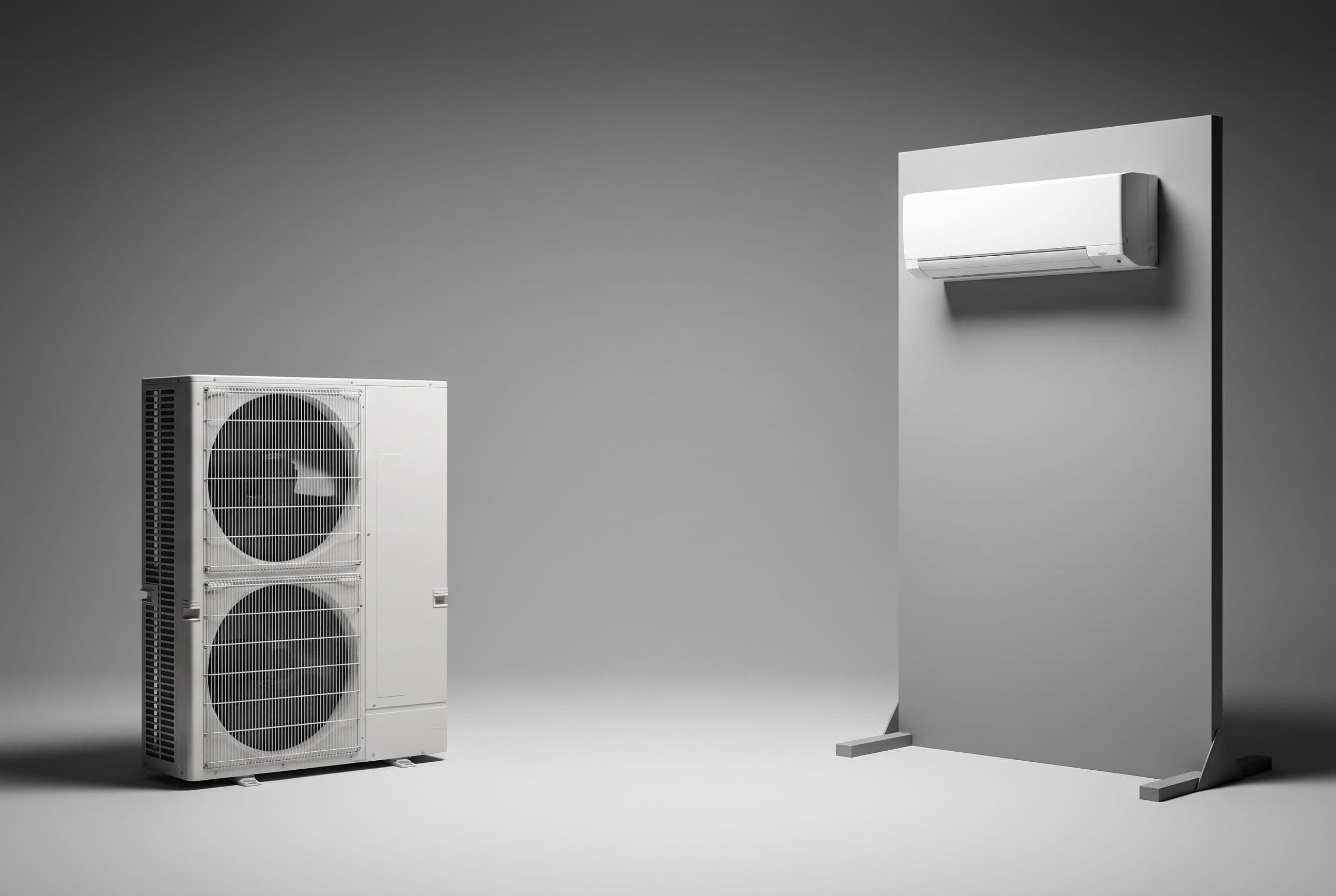
Studio photograph of a Mitsubishi ductless outdoor condenser and wall-mounted indoor unit

Which Mitsubishi are you actually being quoted?

"Mitsubishi heat pump" covers more than one product line, and which one you're being quoted changes the story completely:

  • Ductless Hyper-Heat (mini-split): wall-mounted or ceiling-cassette indoor units with no ductwork, sized to heat and cool one room or zone at a time, single-zone or multi-zone. This is the line with Mitsubishi's strongest reputation, covered in detail below.
  • Ducted Hyper-Heat, the SVZ line: an SVZ air handler paired with a Hyper-Heat outdoor unit, connected to the same ductwork/vents a furnace or central air system already uses. This is the ducted comparison point on this page, and installers describe it as the weaker part of the catalog.
  • P-series single-zone ducted units: a smaller, pricier ducted option one Denver-based Mitsubishi Diamond contractor described on Reddit as lacking cheap compatible zone dampers and standard WiFi.

Even within the ducted SVZ line, the exact pairing matters: Mitsubishi's ducted systems are sold as an outdoor unit matched with a separate indoor air handler, not a single fixed product, so the numbers on your quote depend on which two model numbers you're actually getting. It's worth asking your installer for both rather than assuming any "Mitsubishi ducted" quote means the same spec sheet, a rule that holds industry-wide, not just for Mitsubishi. In practice, the SVZ-plus-Hyper-Heat pairing installers commonly quote lands close to SEER2 18, EER2 13, and HSPF2 10 per crowdsourced quote data, with the same -13°F cold-climate floor across most of what actually gets installed.
Already have a quote?

Get a Jetson price for your home, then have our team walk you through how it compares

Get my price

Jetson Air sidesteps that guessing game entirely. It's one ducted system with a single spec sheet, so you're not stuck wondering whether your quote landed you the strong side of a lineup or the weak one. What Mitsubishi owners actually report once the system is running is further down this page, but here's the short version of how the two compare first.

Meet Jetson Air

Meet Jetson Air

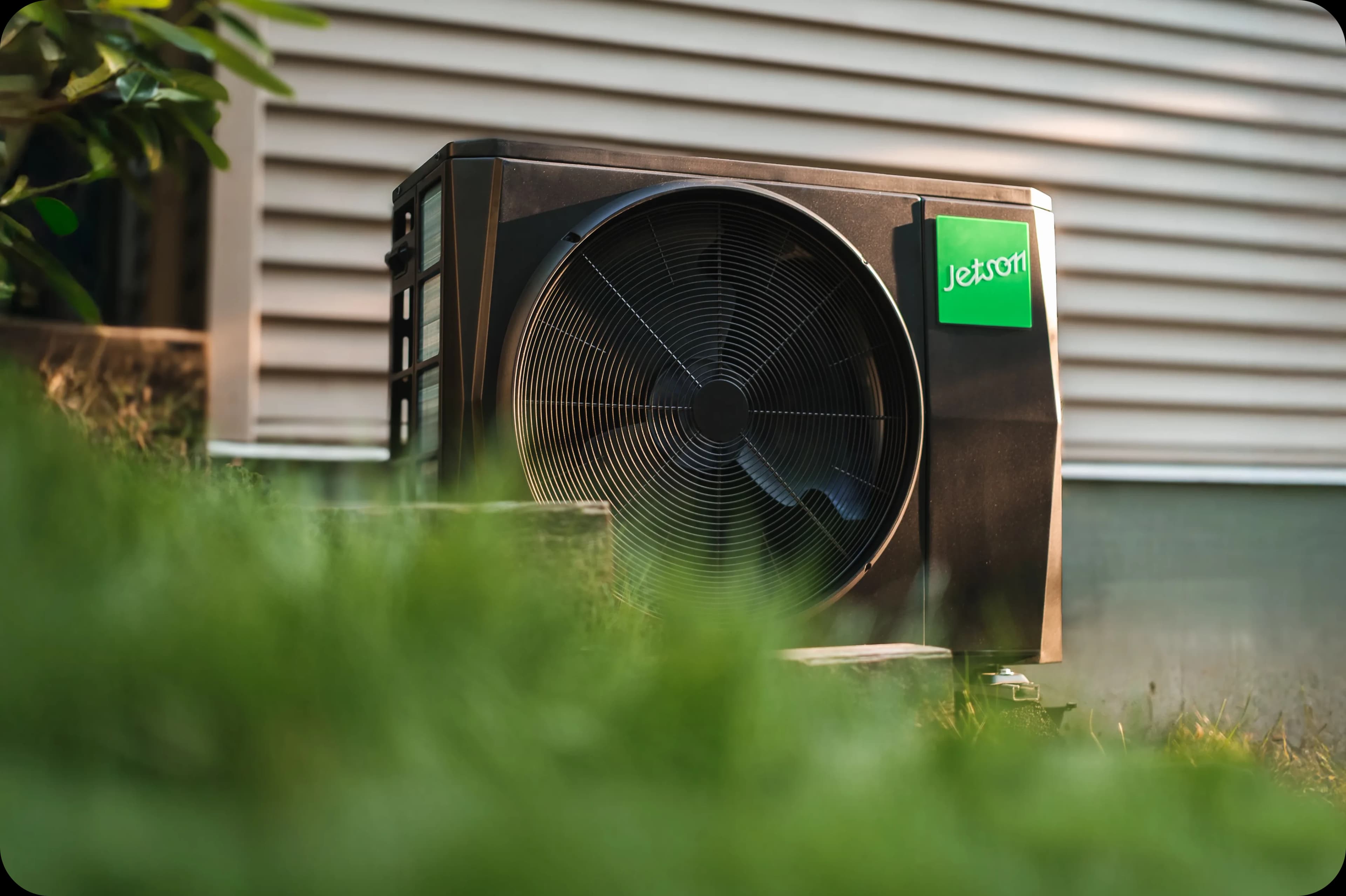
Jetson Air is a central, ducted heat pump rated SEER2 17, HSPF2 9.4, and EER2 10.8 (a related cooling-efficiency rating measured under a single hot-day condition, rather than SEER2's seasonal average), certified to -22°F under the ENERGY STAR Cold Climate program. Jetson designs the system, the sizing, and the software; a manufacturing partner builds the equipment, and Jetson's own crews handle the install.

TIME's Best Invention 2025
At a glance

Jetson Air vs. Mitsubishi Hyper-Heat

A quick summary of how the two compare; the full spec breakdown by lineup is further down the page.

Jetson Air
Cold-climate floor
-22°F, ENERGY STAR Cold Climate certified
Ductless option
Central ducted only, no ductless line
Labor warranty
10 years parts and labor with Jetson Care Plus
Who sizes your system
Jetson's own NREL-validated methodology
Ducted certification
Yes, every install
How you get a price
Enter your address, get a sized quote in minutes
Get your own instant price

See if Jetson Air is available at your address

Check availability

Mitsubishi's Hyper-Heat reputation was built on the ductless side of the business, and that reputation doesn't automatically transfer to the ducted SVZ line this comparison is actually about.

The ductless reputation doesn't carry over to ducted systems

Mitsubishi's cold-climate reputation comes from Hyper-Heat, the variable-speed technology in its outdoor units that keeps delivering real heat at low temperatures instead of falling back on backup electric heat. On the ductless side, where Hyper-Heat first made its name, that reputation holds up well. On the ducted side, installers tell a different story:

  • Laminar Collective (installer review): "I think Mitsubishi just didn't focus on upgrading their ducted equipment at all between the R-410A models and the R-454B ones beyond compatibility with new refrigerant." The same review calls Mitsubishi's ductless line best-in-class by contrast, and cites the ducted SVZ line at SEER2 17.10 and HSPF2 9.2, numbers it calls disappointing next to competitors.
  • u/Electrify_Colorado, a Denver-based Mitsubishi Diamond contractor, on r/heatpumps: "The single zone ducted units in the P series are very expensive and to be honest the industry doesn't always make products that play well with Mitsubishis... There aren't cheap compatible zone dampers, WiFi is not standard on the ducted units."
  • u/ItsJustTheTech, same thread: "in the US where central ducted is still the most common they dont really compete... I know a number of guys that still technically sell Mitsubishi but they dont even bother quoting it unless requested."
  • u/QuitCarbon, same thread, a caveat worth keeping in mind regardless of brand: "brands typically matter much less than models... and the skill/quality of the installing contractor."

(R-410A and R-454B are two generations of refrigerant; R-454B is the newer, lower-emissions type now required in new equipment.)

Installer skill is the deciding factor, real owner threads confirm it

That installer-skill point shows up again and again in real owner threads:

  • "Pumpkin" on GreenBuildingAdvisor: described high energy use and short-cycling (the compressor turning on and off more often than it should) with a ducted Hyper Heat multi-split, and said the installer gave minimal training on the system.
  • "User-5946022," same thread: "Mitsubishi Diamond installers stated they have never seen, much less installed a Mitsu ducted system," adding that "Mitsu is of absolutely NO help."
  • "DCcontrarian," same thread, pushing back: argued the measured efficiency was actually in line with expectations once the outdoor design temperature was accounted for, a reminder that one bad experience doesn't prove the equipment is broken.
  • "Akos," on a related GreenBuildingAdvisor thread about the SVZ-KP30NA air handler's modulation behavior: weighed in on sizing and turndown ratio (how far a system can throttle down its output).
  • "Irene3," same thread: advised it's worth "spring[ing] for the hyperheat if they can make it make sense," while cautioning that retrofitting one into old ductwork "is always a bit of a kludge."
  • "tabner" on Hearth.com: described a multi-zone Hyper Heat system badly overshooting temperature setpoints, resolved only after the installer added insulation, swapped in MHK2 thermostats, and rewired the fan-cycling logic. Once fixed: "Night and day switch...rooms are rock solid on temp." (That thread covers the ductless multi-zone line rather than SVZ, but it reinforces the same lesson.)

How a Hyper-Heat system performs, ducted or ductless, depends heavily on whether the person installing it has actually done it before.

What changes when you buy from Jetson

The reviews above kept coming back to the same point: installer skill matters more than whose logo is on the equipment. That's exactly the part of the equation Jetson changes. Jetson designs the system, the sizing process, and the software that runs it, and skips the distributor-and-dealer chain that normally stacks markup onto a ducted system, the same reason buying direct from Costco costs less than going through a middleman. Every install is handled by Jetson's own trained crews instead of a subcontracted team or whichever dealer happens to carry the brand. That means one company is accountable for the design, the install, and the support afterward, instead of a manufacturer's parts warranty and a separate independent dealer's labor terms.

A few concrete differences show up once you're comparing actual installs:

  • Sizing: calculated from real data using Jetson's own NREL-validated methodology (NREL is the National Renewable Energy Laboratory, a U.S. Department of Energy research lab) instead of a manufacturer's default chart, exactly the kind of mismatch that shows up as short-cycling and overshot setpoints in several of the threads above.
  • Install speed: done in a single day, by Jetson's own crews rather than a subcontracted install team.
  • Ongoing monitoring: remote monitoring watches system health 24/7, so a developing issue is more likely to get flagged early, often cleared remotely or with a quick guided step like power-cycling the outdoor unit's breaker, and escalated to a technician if it doesn't resolve.
  • Rebates: Jetson handles filing for available rebates as part of the purchase.
  • Quote: enter your address and get a real, sized quote online in minutes, instead of waiting for a dealer to schedule an in-home visit and call you back.

Jetson Air keeps improving after install

That same remote connection that watches for problems after install is also what lets Jetson Air improve over time, the way a phone gets better through software updates rather than staying frozen at the spec sheet from the day it was bought. In July 2026, Jetson rolled out Air Quality Monitoring to every existing customer automatically, no new hardware required, because the sensors were already built into the system. As Jetson co-founder and CEO Stephen Lake put it, that kind of update means "thousands of existing homes will receive a new feature they didn't have when the equipment was installed, something no other central heat pump system can do." Separately, Jetson Air was named one of TIME's Best Inventions of 2025, announced months before this rollout. None of that changes the hardware numbers, though, so here's exactly how the two systems compare spec for spec.

Jetson Air vs. Mitsubishi Hyper-Heat, by lineup

Figures marked * are from the installer reviews and owner reports cited on this page, not a direct AHRI or ENERGY STAR database lookup performed for this comparison, so treat them as directional. Ductless Hyper-Heat spans many models and zone counts, so SEER2/HSPF2/EER2 vary by the specific unit quoted.

Jetson Air
Mitsubishi Hyper-Heat (Ductless)
Mitsubishi Hyper-Heat (Ducted SVZ)
SEER2
17
Varies by model*
17.10*
HSPF2
9.4
Varies by model*
9.2*
EER2
10.8
Varies by model*
12.4 (SVZ-KP18NA/SUZ-KA18NAHZ)*
Cold-climate floor
-22°F
-13°F (Hyper-Heat outdoor units)*
ENERGY STAR Cold Climate certified
Yes
Varies by model, check the specific unit*
System type
Central ducted only
Ductless mini-split (wall or ceiling unit, single- or multi-zone)
Central ducted (SVZ air handler + Hyper-Heat outdoor unit)
Warranty
10 years parts and labor with Jetson Care Plus
Varies by dealer and registration
Sizing method
Jetson's own NREL-validated methodology, calculated from real data
Installer-performed load calculation; varies by dealer
Install
Single day, by Jetson's own crews
Subcontracted installer; varies by dealer
Remote monitoring
24/7 remote monitoring, standard on every install
WiFi/app control available on select models, not standard
Not standard on ducted models

If you're weighing Mitsubishi against Trane specifically, our Trane vs. Mitsubishi comparison covers that matchup directly. And if Mitsubishi isn't the only brand on your list, our full roundup of the best heat pumps lines up the rest of the field on the same real-numbers basis.

Not every product line gets the same investment

If you're comparing ducted systems, it's worth seeing one that was actually built around ducted installs from the start

Explore Jetson Air

The honest verdict

Mitsubishi's Hyper-Heat lineup is genuinely excellent on the ductless side, and its ducted SVZ specs land close to Jetson Air's on paper. The one place they clearly diverge is how far each is rated to keep working: Jetson Air holds to -22°F, well past Mitsubishi's -13°F Hyper-Heat floor, right when a cold snap would otherwise force a system onto backup electric heat.

Beyond the hardware, Jetson designs, sizes, installs, and monitors the whole system itself, with no distributor or dealer markup layered into the price, and backs it with 10 years of parts and labor through Jetson Care Plus. For homeowners with existing ductwork who want a whole-home heat pump without betting on which Mitsubishi dealer actually knows the ducted line, Jetson Air is worth comparing directly against your own Mitsubishi quote. Enter your address and you'll know in minutes whether it's available at your house and how much it costs, no dealer visit or callback required.

See if Jetson Air is available near you
Get a quote sized from your home's actual data
No dealer visit or callback required

Still deciding between Mitsubishi and Jetson Air? See real pricing for your home in minutes

Get your quote

Ready to make the switch?
Let's get started!

Explore Jetson Air