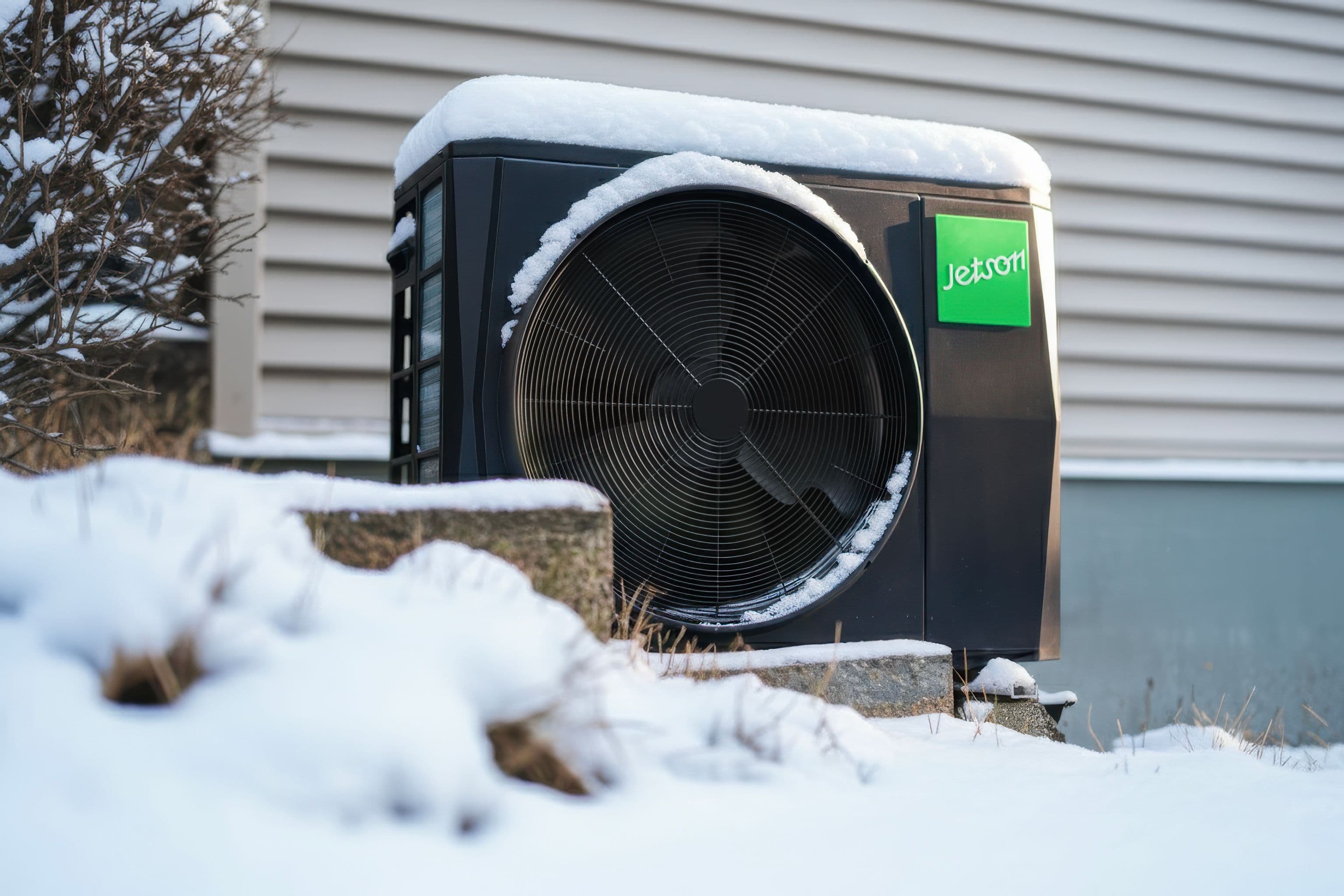
What is a Heat Pump?
A heat pump moves heat rather than creating it. In winter, it pulls heat from the outdoor air and brings it into your home. In summer, it reverses direction and carries heat out. There's no furnace, no fuel, and no combustion involved. One system handles both your heating and cooling, all year long.
Because it's moving energy instead of generating it from scratch, a heat pump uses significantly less electricity than traditional systems. That's not a theoretical benefit or a future promise. It's just how the technology works.
What is a Cold Climate Heat Pump?
You've probably heard that heat pumps don't work in the cold. That was a fair criticism of older systems, which would lose efficiency once temperatures dropped below freezing and had to rely on backup electric heat strips to get through winter.
Today's cold-climate heat pumps are a completely different technology. They use more advanced compressors, smarter controls, and refrigerants specifically designed to capture heat from outdoor air as cold as –22°F (–30°C). These aren't warm-weather systems with a cold-weather mode added on. They're built from the ground up for serious winters.
In practice, that means reliable, steady heat through the coldest months without a backup furnace or any fossil fuels. And when summer comes around, the same system handles your cooling. You get one unit that covers both jobs instead of maintaining two separate systems.
What is the lowest temperature a heat pump can handle?
Older heat pumps started struggling around 14°F, and that's where a lot of the skepticism comes from. If your neighbor had a heat pump in 2008 that couldn't keep up in January, their experience was real. The technology just wasn't there yet.
It is now. Modern cold-climate systems operate efficiently down to –22°F (–30°C). They don't just get by at those temperatures; they're specifically designed for them.
Our rule of thumb is simple: if people live there year-round, there's a heat pump that works there year-round. At Jetson, every system we install is a cold-climate system. We're not interested in selling equipment that underperforms when you need it most.
Do I need to upgrade my electrical panel?
Not always. A lot of homes already have enough electrical capacity for a heat pump, especially if you've got a 100-amp panel and aren't running a bunch of other high-draw appliances like an EV charger or hot tub.
That said, every home is different. We look at your electrical setup during the quoting process and give you a straight answer before any work starts. If an upgrade is needed, we handle it as part of your installation so everything gets done at once and your home is set up for whatever electrification you want to do down the road.
What size heat pump do I need?
It genuinely depends on your home, which is why we don't guess. Square footage, insulation quality, layout, local climate, window placement... all of it matters. And getting the sizing right is one of the most important parts of a good installation. An oversized system cycles on and off too frequently, wastes energy, and wears out faster. An undersized one just can't keep up.
Our quoting system uses thermal analysis software to calculate exactly what your house needs. No rules of thumb, no contractor eyeballing it. Just the right system for your specific situation. You can start with an instant quote to see what that looks like for your home.
Can a heat pump replace my furnace?
In most homes, yes, completely. A cold-climate heat pump delivers the same reliable, even heat you'd get from a gas or oil furnace, without fuel deliveries, open flames, or combustion happening in your basement.
If your home already has ductwork, the transition is usually simpler than people expect. The heat pump's indoor unit typically fits right where the old furnace was, and your existing vents keep distributing heat the same way they always have.
There's a real financial case for switching too. Gas and oil prices are unpredictable and trending up. Electricity is more stable, and heat pumps use a lot less of it than you'd think. When you factor in available rebates and the lower maintenance costs that come with having no combustion equipment, the switch tends to pay for itself faster than most homeowners expect.
How long do cold-climate heat pumps last?
You're looking at 15 to 20 years with regular maintenance, which is right in line with a gas furnace or traditional air conditioner. The difference is that your heat pump is handling both heating and cooling in a single unit, so you're getting more value out of one piece of equipment.
Every Jetson system comes with a 10-year parts and labor warranty and built-in remote monitoring through our Care Plus plan. That means we're keeping an eye on things even when you're not thinking about it, catching small issues before they become expensive ones.