Still have questions?

Talk directly with a Jetson Expert to learn more.

Is Carrier Infinity Worth the Money? A Real Look at the Reviews

How Carrier's flagship Infinity line performs and prices, and how Jetson Air's no-markup pricing compares.

Carrier's Infinity line is capable, AHRI-certified hardware (up to 23 SEER2 on the current Infinity 23 flagship), but whether it's worth the money comes down to which dealer prices your job and which generation of Infinity you end up with far more than the badge itself, since real bid comparisons and owner reviews both point to dealer markup and hardware generation, not defects in the equipment, as the deciding factors. This page breaks down real Carrier Infinity pricing, tiers, and reliability data, and how it compares to Jetson Air, the direct-to-homeowner heat pump built, sized, and installed by one company end to end, with no dealer markup and a warranty that covers labor as well as parts.

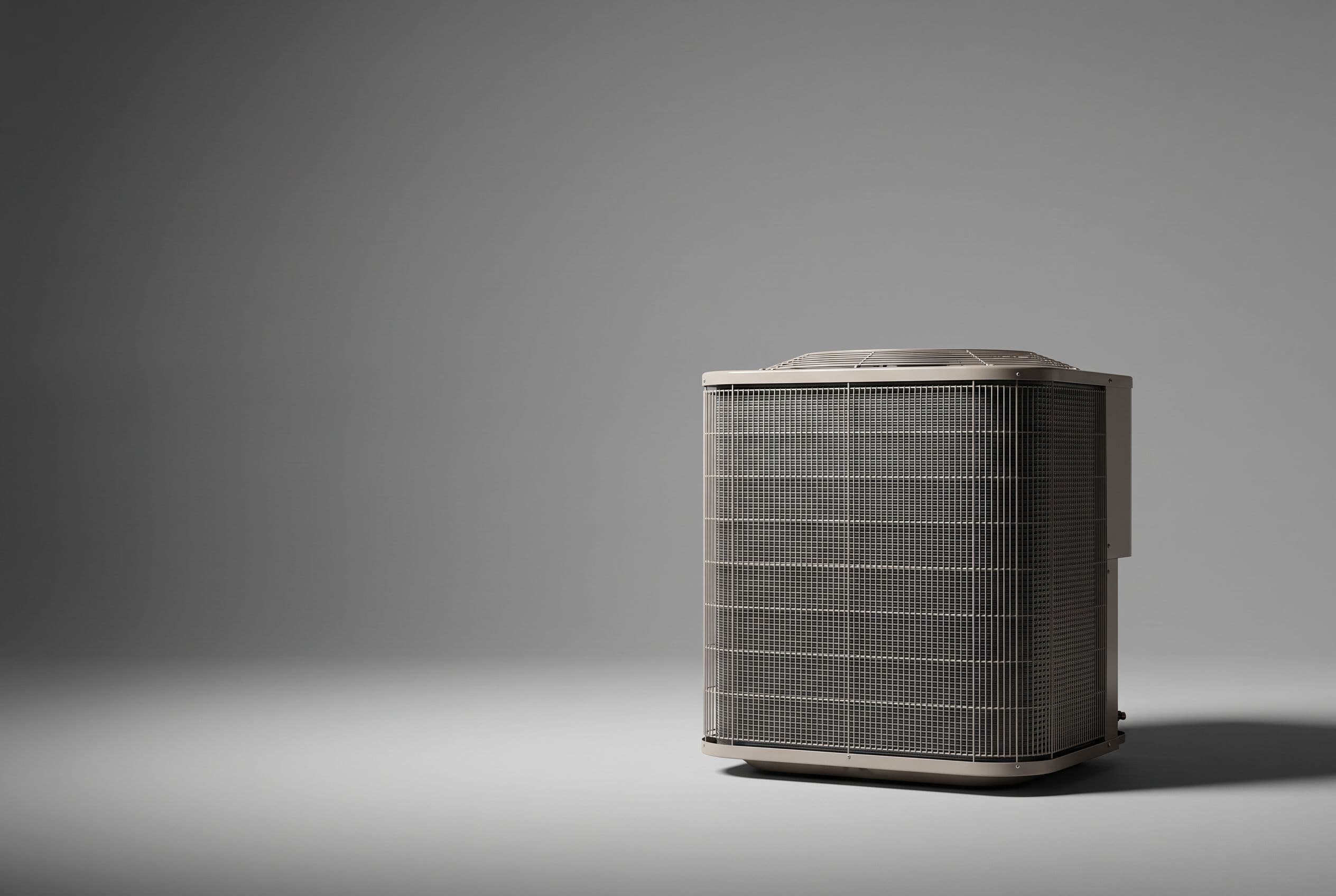
Studio photograph of a Carrier heat pump outdoor unit

Which Carrier are you actually being quoted?

Here's the direct answer: Carrier doesn't sell one ducted heat pump. It sells three real tiers, and knowing which tier (and, if it's Infinity, which of two current flagships) you're actually being quoted matters more than the "Carrier" or "Infinity" name on the paperwork, because the numbers vary a lot between them:

  • Comfort™ (entry-level): single-stage compressor, topping out around 15 SEER and 8.5 HSPF
  • Performance™ (mid-tier): two-stage compressor, topping out around 17.5 SEER and 9.5 HSPF
  • Infinity® 23 Heat Pump (27VNA3): the efficiency flagship. AHRI-certified up to 23 SEER2 / 10.5 HSPF2 / 13.5 EER2, rated on Carrier's own product page down to -13°F
  • Infinity® 21 Ultimate Cold Climate Heat Pump (27VNA1): the cold-climate flagship. Rated 21.2 SEER2 / 12.5 HSPF2, lower on paper, but built to keep producing heat down to -23°F

(The Comfort and Performance figures above are Carrier's own published tier specs on the pre-2023 test scale, not AHRI-certified SEER2 numbers, and not independently verified against AHRI's certificate database.) Same series, same "Infinity" badge on the top two, genuinely different machines built for different jobs.

What actually shows up in real quotes tells a different story than the current lineup above. A Reddit r/heatpumps community survey of 1,275+ self-reported quotes found:

  • The Carrier ducted model homeowners most often reported being quoted wasn't the current Infinity 23 flagship, it was the 25VNA4, the prior-generation Infinity 24 Heat Pump with Greenspeed Intelligence (the same line the 2022 Reddit thread above quoted) that Carrier has since discontinued and dropped from its site. Its published numbers only go up to 22.5 SEER / 14 EER / 11 HSPF on the pre-2023 test scale, so there's no verified SEER2 figure to line it up against Jetson Air's 17 SEER2 or the current Infinity 23's 23 SEER2.
  • The other two most commonly quoted Carrier models were single-zone ductless condensers from the Performance™ line, the 38MARBQ24AA3 (Performance™ Ductless) and the 38MURA (Performance™ 18 Compact), rated 14.7-18 SEER2 / 8.2-12.4 EER2 / 8.2-9.8 HSPF2 with a heating floor of -22°F on the high-heat models. If you're shopping ductless for a single room instead of a whole-home system, that's a different product line entirely, not a lower Infinity tier, so it isn't a fair efficiency comparison against a ducted system like Jetson Air.

Jetson only builds one system, so there's no tier ladder to shop within: Jetson Air is built to compare against Carrier's best tier, Infinity, not Comfort or Performance. But Infinity itself has to split into two flagships because Carrier's highest SEER2 and its deepest cold-climate floor aren't the same product, the Infinity 23 wins on efficiency and gives up cold-weather range, the Infinity 21 wins on cold-weather range and gives up efficiency. Jetson Air, at 17 SEER2 / 9.4 HSPF2 / 10.8 EER2 and certified to -22°F, doesn't have to make that tradeoff in one unit, more on how that stacks up against each Infinity flagship below.
Already have a quote?

Get a Jetson price for your home, then have our team walk you through how it compares

Get my price

That's the real risk baked into a Carrier quote: you're not just picking a heat pump, you're hoping the tier, Comfort, Performance, or Infinity, and if it's Infinity, the flagship, that shows up on your paperwork is the one you actually wanted, and that depends more on which dealer answered the phone than on anything you chose. Jetson Air sidesteps that good-better-best guesswork because it's the only heat pump Jetson builds. Jetson designs the system, the software that runs it, and the sizing process itself, so every Jetson Air quote is the same machine, not one of three tiers or two competing flagships. The real bid comparisons and owner reports further down this page show just how much that tier-and-generation guesswork can end up costing buyers in practice.

Central heat pump system
Meet Jetson Air

Meet Jetson Air

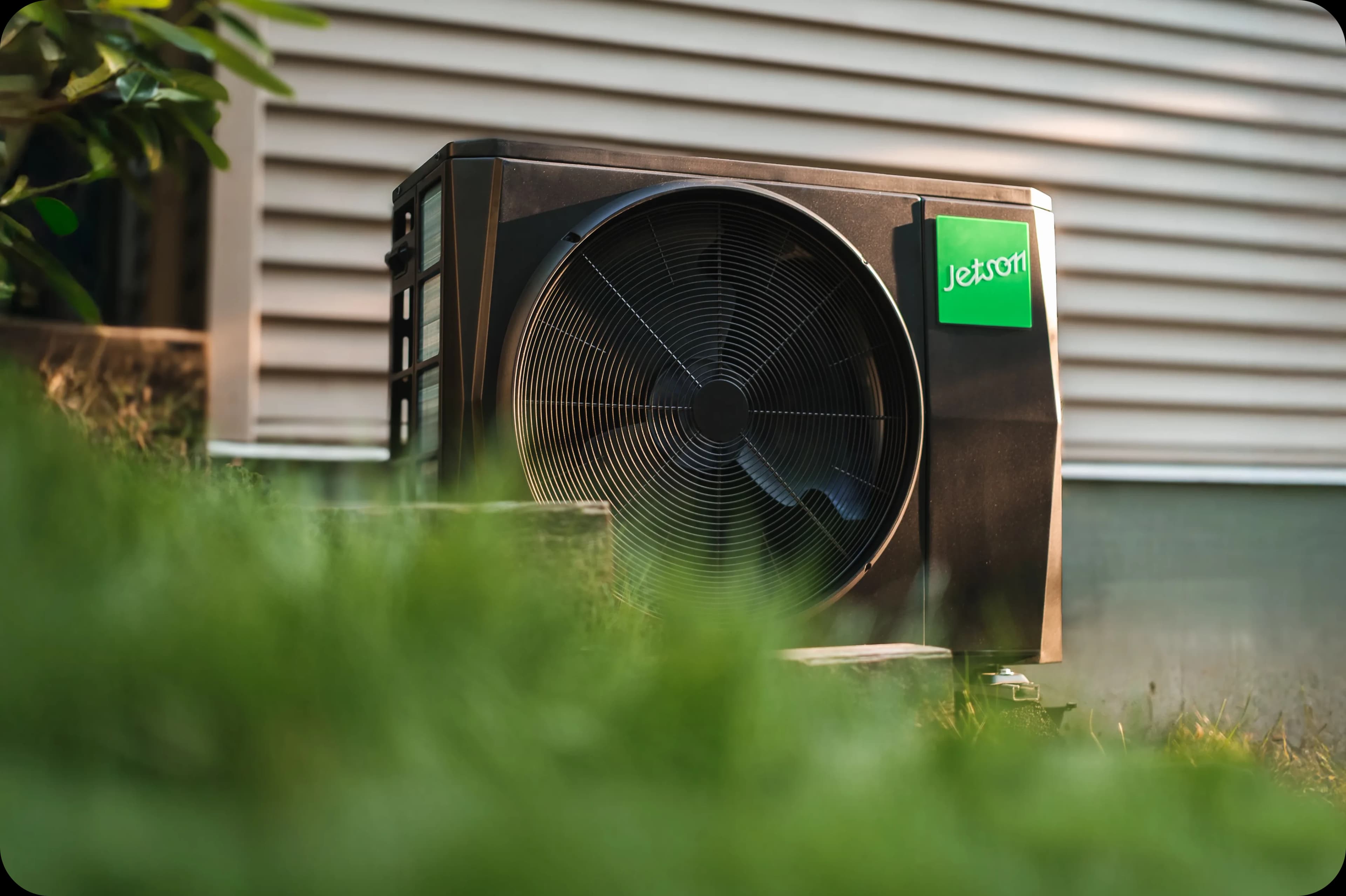
Jetson Air is a fully ducted, cold-climate heat pump system that Jetson designs, sizes, sells, and installs directly. It's rated SEER2 17, HSPF2 9.4, and EER2 10.8, and it's certified to keep producing heat down to -22°F (AHRI #217429780).

TIME's Best Invention 2025
At a glance

Jetson Air vs. Carrier: the short version

Here's a quick summary of how the two compare on the decisions that matter most; the full tier-by-tier spec breakdown against both Infinity flagships is further down.

Jetson Air
Cold-climate floor
-22°F, rated and certified, in one system
Which system you're quoted
The same one every time
Who sizes your system
NREL-validated methodology, done in-house
Install
Jetson's own crews, not a subcontracted dealer
How you get a price
Enter your address, see pricing online in minutes
Where you can get it
A handful of North American markets so far
Labor warranty
10 years parts and labor bundled with Jetson Care Plus
Get your own instant price

See if Jetson Air is available at your address

Check availability

The tier and generation guesswork covered above shows up concretely once real quotes get compared.

Why three quotes for "the same" heat pump come back so different

In November 2022, a homeowner in central Pennsylvania posted three real contractor bids to r/heatpumps for the same job, a 3-ton heat pump replacement:

  • Contractor 1: Mitsubishi Hyper Heat (outdoor unit PUZ-HA36NKA paired with a PVA-A36AA7 air handler)
  • Contractor 2: Bosch IDS Premium (BOVA-36HDN1-M20G with a BVA36WN1-M20 handler)
  • Contractor 3: Carrier Infinity 3-ton Greenspeed system with a matching air handler

All three bids priced within the same general range for comparable premium hardware, and exactly where each one landed had more to do with which dealer was bidding than with the equipment itself. That's the more interesting part of the thread: why the same type of job produces such different numbers at all. Carrier doesn't sell equipment directly to homeowners. Carrier's own website routes every consumer inquiry straight to a dealer locator, because the company sells through a network of independent distributors, who in turn sell to independent dealer and installer businesses, who are the ones who actually quote your job. Each link in that chain adds its own markup before the equipment reaches your driveway. That's standard practice across most major legacy HVAC brands, not something unique to Carrier, but it's a real part of why "the same system" can carry noticeably different prices depending on which dealer happens to be bidding, what their relationship with their distributor looks like, and how much margin they build in. When you get three quotes for a Carrier Infinity system, you're not really comparing hardware. You're comparing three dealers' pricing on top of the same hardware.

Why those efficiency numbers don't mean what they look like

The efficiency numbers in that same Reddit post are worth a second look, because they're a good example of how a spec sheet can mislead you if you don't know one thing: the government changed how these numbers get measured. The table the original poster shared listed:

  • Carrier Infinity (2022 quote): SEER 22.5 / HSPF 11.5 / EER 13
  • Mitsubishi Hyper Heat: SEER 20 / HSPF 10.4 / EER 13
  • Bosch IDS Premium: SEER 20 / HSPF 10.5 / EER 12.5

Those numbers are real, but they're all on an older test standard. Starting January 2023, the Department of Energy switched to a tougher lab test that better reflects how a system performs pushing air through real ductwork (the vents and ducts that move heated or cooled air through a house, the kind of setup a furnace or central AC uses), and the industry now labels those results "SEER2," "HSPF2," and "EER2." The new test produces lower numbers than the old one on identical hardware, so a plain "EER 13" quoted before 2023 isn't the same as an EER2 rating quoted today. The test changed; the hardware didn't necessarily get worse.

Carrier's current top-tier model, the Infinity 23 Heat Pump (model 27VNA3), is AHRI-certified (AHRI is the independent industry group that verifies manufacturer efficiency claims) today at up to 23 SEER2, 10.5 HSPF2, and 13.5 EER2, on the new scale, replacing the Infinity 24 Greenspeed line that Reddit thread quoted back in 2022. If a contractor hands you a spec sheet with plain "EER" or "SEER" instead of "EER2" or "SEER2," ask which test it's using before you compare it to anything else.

Which Infinity tier and generation you're quoted matters less once you look past the sale to what happens years into owning one.

What owners and forums actually say about Infinity reliability

Price and efficiency ratings are only part of the picture. What happens after installation matters more, and Carrier's Infinity line has a genuinely mixed record here, with a real generational split worth understanding before you sign anything.

Early-generation units (mid-2000s):

  • On the professional and homeowner forum HVAC-Talk, a homeowner in Myakka, Florida started a thread in 2016 (36 replies, 19,000 views over the following four years) describing 5+ years of repeat failures on an early-generation Infinity heat pump: valve failures, circuit board replacements, a coil replaced roughly annually, and eventually a compressor. Techs who serviced the system reportedly told him this was "the earliest of the Infinity, with many known problems."
  • The comment section on an independent review blog, HVAC Reviews, tells a similar story from the same era (comments dated 2009-2011, describing units installed in the mid-2000s):
    • A homeowner in Charleston, WV, and David Werner in San Antonio, TX (5-ton unit installed 2006) both reported a recurring defect where the heat strips and the AC ran at the same time.
    • David Mudd, mid-state South Carolina (3-ton unit), called his Infinity system "top of the line" on paper but reported repeated sensor and thermostat-error failures that eventually led him to remove it.
    • Not every account there is negative: William Rahm, north-central Florida (4-ton, two-stage), reported a good experience and roughly $65 a month in savings. But the complaints on that page cluster around the same early-generation hardware described in the HVAC-Talk thread.

That detail matters, because Carrier's Infinity line has gone through real hardware revisions since its original launch. A unit installed in the mid-2000s isn't the same product as a current Infinity 23 system.

More recent sentiment (2025-2026):

ConsumerAffairs shows 691 reviews of Carrier as a brand at a 1.1-out-of-5 average. It's an unclaimed business profile with user-submitted, unverified reviews, so treat it as real but anecdotal sentiment rather than audited data. Several reviews specifically name Infinity products:

  • Donn, Minneapolis (May 2026): a recurring error code on an Infinity furnace installed in early 2025
  • Steven, Dallas (May 2026): Carrier told him replacement parts were no longer made for his six-year-old Infinity system
  • Pat, Emmaus, PA (January 2026): a top-of-line Infinity furnace's heat exchanger failed six months after the warranty ended
  • Alexander, Alexandria, VA (November 2025), a 30-year Carrier customer: described seven unresolved service calls on his Infinity units, with his own installer's techs advising him against buying one again

Most other reviews on that page reference "Carrier" generically without confirming the Infinity tier, so it's worth weighing the Infinity-named reviews more heavily than the raw aggregate score.

What actually changes when you buy from Jetson

Most of the failures above trace back to what happened years after installation, not a manufacturing defect on day one: repeat service calls, parts that were no longer made, and an installer relationship that didn't hold up when something broke. Jetson designs the system, the software that runs it, and the sizing and spec process in-house, then sells and installs it directly with its own trained crews, so the equipment doesn't pass through a distributor and a separate dealer before it reaches your home, the same reason buying direct from Costco costs less than going through a middleman. That also means one company is accountable for the design, the install, and the support afterward, instead of a manufacturer's parts warranty and a separate independent dealer's labor terms. A Carrier buyer and a Jetson buyer both deal with exactly one installer on the day of the job, so the two purchases don't differ in how many people you deal with. The difference is what's already been added to the price by the time that installer shows up: a Carrier quote has absorbed a distributor's margin and a dealer's margin before the installer walks your yard, which is a real part of why the same nameplate system can quote so differently between contractors, as the Reddit thread above shows. Jetson skips that layer entirely.

A few concrete differences show up once you're comparing actual installs:

  • Sizing: Jetson sizes each system from real household and climate data using its own NREL-validated methodology (validated against U.S. Department of Energy modeling standards from the National Renewable Energy Laboratory), so you're not getting an oversized or undersized system just because that's what happened to be on the truck.
  • Install speed: done in a single day, by Jetson's own crews (trained at a dedicated facility in Denver) rather than a subcontracted dealer network, which also means the company that installed your system is the same company you call afterward.
  • Ongoing monitoring: the system reports operating data back to Jetson continuously, and remote monitoring watches system health around the clock. A developing issue is more likely to get flagged early, often cleared remotely or resolved with a quick guided step (most commonly power-cycling the breaker on the outdoor unit) that Jetson support walks you through by email or text, with no truck roll needed if that resolves it. If it doesn't, or if it's something serious like no heat, a refrigerant leak, or flooding, staff escalate straight to sending a real technician rather than cycling through more remote troubleshooting. The goal is catching a developing problem early enough that you often hear about it from Jetson before you'd have noticed it yourself.
  • Rebates: Jetson files for the rebates and incentives your system qualifies for as part of the process, rather than leaving you to track down utility and state programs on your own.
  • Quote: enter your address and get a real Jetson Air quote online in minutes, instead of waiting for a dealer to schedule an in-home visit and call you back.

Every system carries a standard 5-year parts and 1-year labor warranty, and Jetson Care Plus, an optional add-on at install, extends both parts and labor to 10 years each. Jetson Air is currently available in a handful of North American markets, not nationwide yet, so check your address to see if it's one of them.

Jetson Air vs. Carrier Infinity, tier by tier

The Infinity 23 figures are current AHRI-certified ratings for Carrier's efficiency flagship (27VNA3); the Infinity 21 figures are Carrier's own published ratings for its cold-climate flagship (27VNA1), since Carrier splits efficiency and cold-weather performance across two different products rather than one. Comfort and Performance tiers are left out of this table because their published specs sit on the older pre-2023 test scale, not SEER2, as covered above.

Jetson Air
Infinity 23 (27VNA3)
Infinity 21 Ultimate Cold Climate (27VNA1)
SEER2
17
Up to 23
21.2
HSPF2
9.4
10.5
12.5
EER2
10.8
13.5
Not published by Carrier
Cold-climate floor
-22°F, rated and certified
-13°F
-23°F
ENERGY STAR Cold Climate certified
Yes
Not confirmed
Not confirmed
System type
Fully ducted, central system
Ducted split system
Ducted split system
Warranty
10 years parts and labor with Jetson Care Plus
Typically 10-yr parts if registered within 90 days (varies by dealer)
Sizing method
Data-driven, Jetson's NREL-validated methodology
Varies by dealer
Varies by dealer
Installation
Single day, Jetson's own crews
Varies by dealer, typically 1-2 days
Remote monitoring
24/7 remote monitoring with proactive alerts
Not standard, depends on dealer and thermostat

If Carrier isn't the only brand on your list, our full roundup of the best heat pumps lines up the rest of the field on the same real-numbers basis.

How Jetson prices differently

See one straightforward price, with no distributor or dealer markup stacked on top

Check my address

Which one actually makes sense for you

Carrier's dealer network reaches nearly anywhere in the country. Its lineup splits across two flagships: the Infinity 23 for efficiency and the Infinity 21 for cold climates. That split has a cost. The Infinity 23 only heats down to -13°F, while Jetson Air is rated and certified to -22°F in one machine that doesn't force the tradeoff.

Beyond the hardware, the real difference is structural: every Carrier quote already carries a distributor's and a dealer's markup, while Jetson designs, sizes, sells, installs, and monitors the system as one company, with 10 years of parts and labor covered through Jetson Care Plus. For homeowners in Jetson's service area who want a whole-home ducted system without shopping dealers against each other, Jetson Air is worth comparing directly against your own Carrier quote. Enter your address and you'll know in minutes whether it's available at your house and how much it costs, no dealer visit or callback required.

Check availability at your address
Enter your address to see a real Jetson Air quote in minutes
One company, start to finish
See how Jetson Air's no-markup pricing and -22°F rating compare to your Carrier quote
Check my address

Keep exploring

See all resources →

Ready to make the switch?
Let's get started!

Explore Jetson Air