Still have questions?

Talk directly with a Jetson Expert to learn more.

York Heat Pump Problems: What Owners Are Actually Saying

What real owners say about York's coil reliability and warranty process, and how Jetson Air compares on accountability.

York is a legitimate budget-tier heat pump brand with solid third-party review scores, Today's Homeowner rates it 4.7 out of 5, but owners and HVAC pros report a recurring pattern of microchannel condenser coil leaks worth knowing about before you buy. Here's what the reviews, Reddit threads, and installer rebuttals actually show, and how it compares to Jetson Air, the direct-to-homeowner heat pump built, sized, and installed by one company end to end, with no dealer markup and a warranty that covers labor as well as parts.

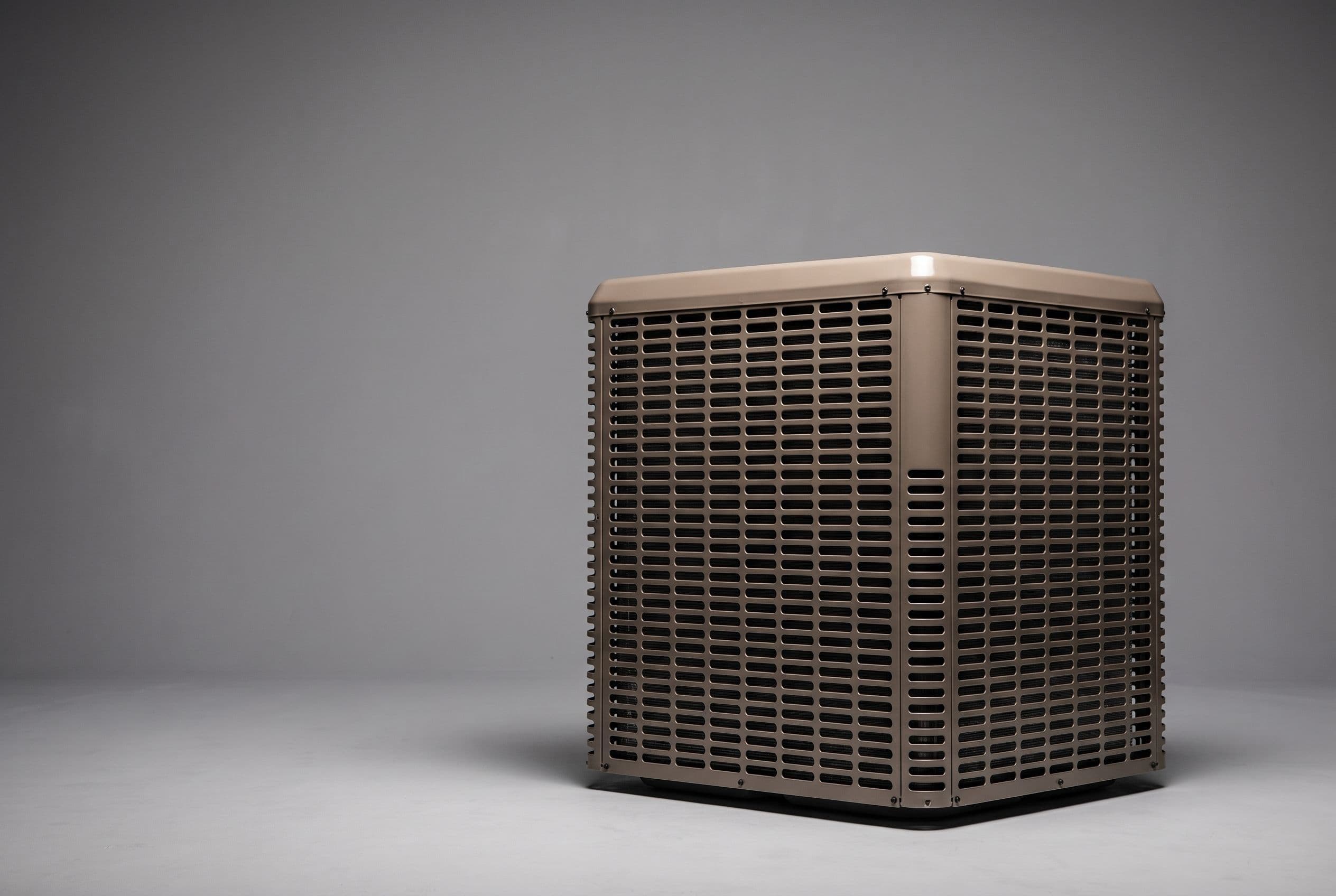
Studio photograph of a York heat pump outdoor unit

Which York are you actually being quoted?

York doesn't sell one heat pump under that badge, it sells a stack of series with different names, and the research for this page didn't turn up full specs for all of them. Here's what's actually confirmed for each name that comes up in reviews and owner threads:

  • Affinity YZV: York's current top-tier, variable-capacity residential line, marketed around cold-climate performance. Published specs: SEER2 up to 19.5 (varies 17–19.5 by size), HSPF2 8.5, EER2 up to 12.4 (varies 11–12.4 by size). Its published cold-climate figure is worth double-checking before you rely on it, more on that in the comparison table further down this page.
  • LX Series: a standard-tier line. HVAC pros discuss its reliability specifically in threads on HVAC-Talk, but no published SEER2, HSPF2, EER2, or cold-climate figures for it turned up in the research for this page.
  • YZH and YZF: named alongside the YZV in Air Conditioner Lab's review as separate residential lines, without the review breaking out separate efficiency numbers for either one.

If your quote just says "York heat pump" without a series name attached, ask which one you're actually being quoted before you compare its numbers against anything else, including the table further down this page.
Where York fits in the heat pump market

York occupies the same lane as brands like Goodman and Amana: solid, no-frills equipment aimed at homeowners who want a working heat pump without paying for the premium badge on the cabinet. That's a legitimate strategy, and it shows up in the pricing tier York and its dealers compete in. Today's Homeowner's review, written by Jonathon Jachura and reviewed by senior editor Andrew Dunn, gives York a 4.7 out of 5 overall, a strong score for a budget-tier brand (priced below the premium, big-name tier). The same review is honest about a wrinkle, though: it notes York has "a disproportionate number of negative reviews" online, and attributes most of that to local dealer and installation quality rather than the equipment itself. That distinction matters, because with York, as with most HVAC brands, the local dealer who installs and services the unit is as much a part of the purchase as the condenser itself, and dealer quality varies a lot more than the hardware does.

Air Conditioner Lab's review, written by Erica Puisis and reviewed by Dean Zoet, goes a level deeper into specific model lines (the YZV, YZH, and YZF series covered in the tier breakdown above) and lands in a similar place: York is a dependable brand at the budget tier, worth considering if price is your main constraint, but the review flags copper coil leaks and a shorter expected lifespan than premium competitors as real tradeoffs to expect going in.

Already have a quote?

Get a Jetson price for your home, then have our team walk you through how it compares

Get my price

Jetson Air is built to answer that dealer-and-market variability directly. Jetson designs the system, the software, and the sizing itself, and partners with a single manufacturer to build it, so every Jetson Air system is the same system, not a stack of series names with different specs to sort through first, and it's installed by Jetson's own crews rather than whichever independent dealer picks up the job. That doesn't make installation quality any less important on its own; a heat pump is still only as good as the crew that installs it, and the coil-question reviews further down this page show how much that one variable can swing the outcome for owners of any brand, York included. Here's how the two options stack up at a glance, with the fuller picture further down the page.

A single-company heat pump system
Meet Jetson Air

Meet Jetson Air

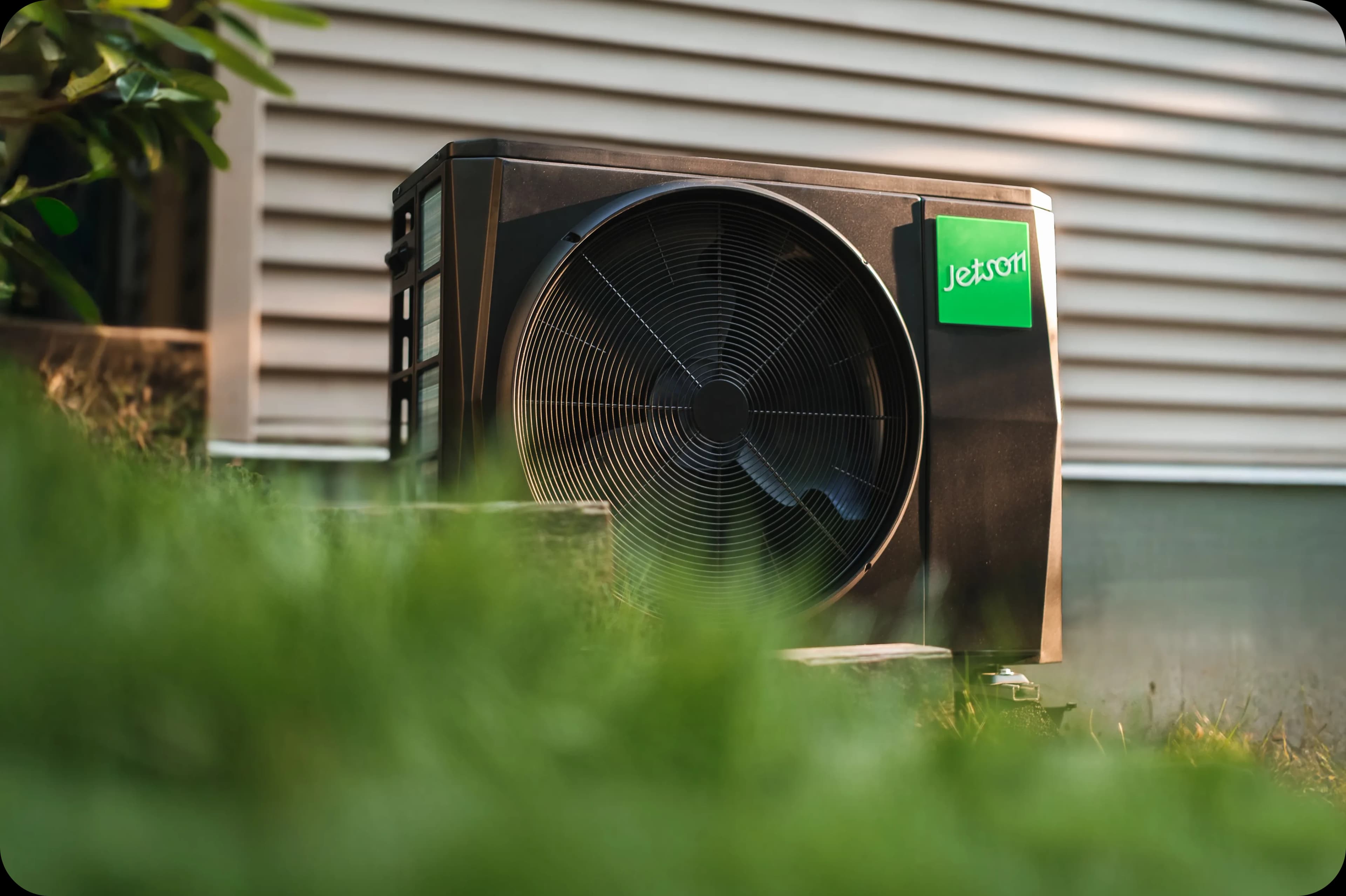
Jetson Air is a fully ducted (connected to the same vents your furnace or central air already uses) cold-climate heat pump system sold in a handful of North American markets. Jetson designs the system, the sizing, and the software behind it, and sells and installs it directly, without the layers of distributor and dealer markup a traditional HVAC purchase carries. Rated to -22°F, it's built for homes that need real heat, not just efficient air conditioning with a heat pump badge on it.

TIME's Best Invention 2025
At a glance

Jetson Air vs. York, the decision-grade differences

Here's the short version of how the two compare, with the full spec and warranty breakdown further down the page.

Jetson Air
Cold-climate certification
AHRI-certified and ENERGY STAR Cold Climate rated to -22°F
Nameplate and engineering backing
Own engineering team; named a TIME Best Invention of 2025
Installation model
Installed by Jetson's own crews, one company start to finish
Labor warranty
1 year standard, 10 years parts and labor with Jetson Care Plus
Upfront price
Priced as a single premium system
Getting a price
Instant estimate online in minutes
Get your own instant price

See if Jetson Air is available at your address

Check availability

The Air Conditioner Lab review mentioned earlier flagged copper coil leaks as a real tradeoff, and that's worth a closer look: it's a specific piece of York's hardware that keeps coming up among owners and technicians.

The microchannel coil question

Here's where owner sentiment gets more pointed than the editorial reviews. York uses microchannel condenser coils, the coils inside the outdoor unit, on a lot of its residential lineup. Instead of the traditional construction (round copper tubing threaded through aluminum fins), microchannel coils use flat aluminum tubes with many small parallel channels running through them. They're lighter, use less refrigerant, and are cheaper to manufacture, which is part of why several value-tier brands have adopted them over the last decade. The tradeoff, according to a lot of the technicians and owners discussing York specifically, is durability: more brazed joints (soldered seams where sections of coil are joined) and thinner-walled aluminum are more exposed to corrosion and vibration fatigue than thicker copper tubing, and a coil leak often shows up as slow, hard-to-notice refrigerant loss rather than a dramatic failure.

Here's what that looks like in owners' and technicians' own words, pulled from Reddit's r/hvacadvice:

  • Comparing outdoor condensers: "Take the Trane. York uses microchannel coils which are known to leak."
  • Which brand would you refuse to install?: "I dont like Trane either, but theyre not complete trash like York is." More bluntly, from u/KinkyRabbi: "York. Its the worst equipment ive ever seen." u/BerryPerfect4451 widened the point beyond York specifically: "Lennox and anything with a microchannel coil."
  • An 8-year-old York 17 SEER system (SEER is the cooling efficiency rating printed on a unit's nameplate, similar to miles-per-gallon for a car, where higher is better): u/Carorack diagnosed the likely cause from the symptoms alone, before the owner confirmed it: "It might be microchannel. Pretty common for york." u/Herpulies agreed: "It is microchannel."
  • The counterpoint: u/PassportCruiser reported their family's HVAC technician saying "currently, they haven't seen many problems with micro channels at all."

That last one matters: it's one technician's current field experience against several other owners' worse ones, and both are real data points. The honest read is that microchannel coils are a known risk factor across the industry, York included, and the odds get better with a good installer and annual maintenance and worse without either.

York's own defense, and where the pros are still arguing it out

York's dealer network is aware of the reputation problem, and at least one installer has written directly into it. A blog post from Alexander Services in Raleigh, NC is titled, without much subtlety, "York AC Review: It's Better Than Consumer Reports Say." The piece argues that negative reviews reflect installation quality rather than the equipment, and makes a specific counter-argument worth noting: because York administers its own warranty program in-house rather than through a third-party administrator, the post claims York's actual warranty-claim costs run lower than competitors like Lennox. That's a real argument, made by people with a financial stake in York looking good, which doesn't make it wrong, just worth reading with that context in mind.

The debate is active enough that HVAC professionals are still hashing it out on HVAC-Talk, in threads specifically about the reliability of York's LX series, and in broader threads on York heat pumps generally. Those threads are real and on-topic, though the forum's current access setup made it hard to pull exact wording for this page. The fact that the conversation is still live among working technicians, years after York's reputation for coil issues first took hold, tells you this isn't a settled question.

What changes when you buy from Jetson

That coil debate is really a debate about who's accountable when hardware doesn't hold up. Jetson designs the system and the sizing process directly. Jetson's own trained crews do the install, not an independent local dealer of varying quality. That means one company is accountable for the design, the install, and the support afterward, instead of a manufacturer's parts warranty and a separate independent dealer's labor terms. Jetson also skips the distributor-and-dealer markup that a traditional purchase stacks onto the price before a homeowner ever sees a quote, the same reason buying direct from Costco costs less than going through a middleman.

A few concrete differences show up once you're comparing actual installs:

  • Sizing: done from real data rather than a generic rule of thumb, using Jetson's own NREL-validated methodology (validated against research from the National Renewable Energy Laboratory, a U.S. Department of Energy lab) to spec the system to the actual house rather than a rough square-footage estimate.
  • Install speed: installation happens in a single day, done by Jetson's own crews rather than a subcontracted local dealer.
  • Ongoing monitoring: once it's running, the system stays connected. Jetson's remote monitoring watches system health continuously, and a developing issue is more likely to get flagged early, often cleared remotely or resolved with a quick guided step like power-cycling the outdoor unit breaker, and escalated straight to dispatching a technician if it doesn't resolve, or if it's serious (no heat, a refrigerant leak, flooding). Nothing about this is automatic self-repair in software; the point is shortening the gap between something going wrong and a person actually working on it.
  • Rebates: Jetson's team files the available rebates as part of the process rather than leaving that paperwork to the homeowner.
  • Quote: because pricing runs through Jetson's own process instead of a dealer's calendar, you can check whether Jetson Air fits your home, and roughly what it would cost at your specific address, in minutes online, instead of waiting for a dealer to schedule an in-home visit and call you back.

Every Jetson Air system carries a standard 5-year parts and 1-year labor warranty, and an optional Jetson Care Plus plan extends that to 10 years of parts and 10 years of labor together, added at install. Jetson currently installs in a handful of North American markets, not nationwide, and only central ducted systems, no ductless minisplits.

Jetson Air keeps improving after install

That same remote connection that watches for problems after install is also what lets Jetson Air improve over time, the way a phone gets better through software updates rather than staying frozen at the spec sheet from the day it was bought. In July 2026, Jetson rolled out Air Quality Monitoring to every existing customer automatically, no new hardware required, because the sensors were already built into the system. As Jetson co-founder and CEO Stephen Lake put it, that kind of update means "thousands of existing homes will receive a new feature they didn't have when the equipment was installed, something no other central heat pump system can do." Separately, Jetson Air was named one of TIME's Best Inventions of 2025, announced months before this rollout. None of that changes the hardware numbers, though, so here's exactly how the two systems compare spec for spec.

A quick translator before the numbers below: SEER2 is the updated version of the SEER cooling-efficiency rating already mentioned above, HSPF2 measures heating efficiency the same way, and EER2 measures cooling efficiency specifically on the hottest days. All three, along with a unit's rated capacity, are printed on its AHRI certificate, the third-party document that verifies a manufacturer's efficiency claims.

Jetson Air vs. York, tier by tier

The YZV is York's current top-tier, cold-climate-oriented line; the LX Series is a standard-tier line discussed for reliability on HVAC-Talk. Neither York tier has full published specs to compare against Jetson Air's certified numbers; see the tier breakdown near the top of this page.

Jetson Air
York Affinity YZV
York LX Series
SEER2
17
17–19.5, depending on size
Not published in research for this page
HSPF2
9.4
8.5
Not published in research for this page
EER2
10.8
11–12.4, depending on size
Not published in research for this page
Cold-climate floor
-22°F, independently AHRI-certified
-10°F published, but this figure traces to a 2017 Affinity YZV brochure that's still being repeated as current, per Bosch's May 2026 YH9 launch announcement
Not published in research for this page
ENERGY STAR Cold Climate certified
Yes
Not confirmed for this page; see the cold-climate floor caveat above
Not confirmed in research for this page
System type
Central ducted only
Central ducted heat pump (York also sells separate ductless lines)
Warranty
10 years parts and labor with Jetson Care Plus
In-house York warranty; term varies by model and registration
Sizing method
Jetson's own NREL-validated methodology, based on the specific home
Depends on the installing dealer; York doesn't publish a standardized method network-wide
Install
Single-day install by Jetson's own crews
Independent local dealer; quality varies by dealer (see reviews above)
Remote monitoring
24/7 system health monitoring with proactive alerts and guided fixes
Not a standard feature

If York isn't the only brand on your list, our full roundup of the best heat pumps lines up the rest of the field on the same real-numbers basis.

Ready to compare for your home

See what these numbers look like at your own address

Check if Jetson Air serves your area

The honest verdict

York's real strength is price: a legitimate budget-tier brand, now backed by Bosch, with a nationwide dealer network. But the clearest gap is cold-weather certification: Jetson Air is independently AHRI-certified and ENERGY STAR Cold Climate rated to -22°F, while York's only published figure, -10°F on the Affinity YZV, traces back to a 2017 brochure that hasn't been updated since Bosch took over the brand.

Beyond the hardware, the bigger difference is who's accountable after the sale: York's equipment and installation come from separate companies, so a coil leak runs through whichever of thousands of independent dealers installed your unit, while Jetson designs, sizes, sells, installs, and monitors the system as one company, backed by 10 years of parts and labor through Jetson Care Plus. For homeowners in Jetson's service area, Jetson Air is worth comparing directly against your own York quote. Enter your address and you'll know in minutes whether it's available at your house and how much it costs, no dealer visit or callback required.

No waiting on a dealer callback
Get a Jetson Air quote for your address in minutes
A different way to buy a heat pump

See what Jetson Air costs at your address in minutes

Get my instant quote

Keep exploring

See all resources →

Ready to make the switch?
Let's get started!

Explore Jetson Air