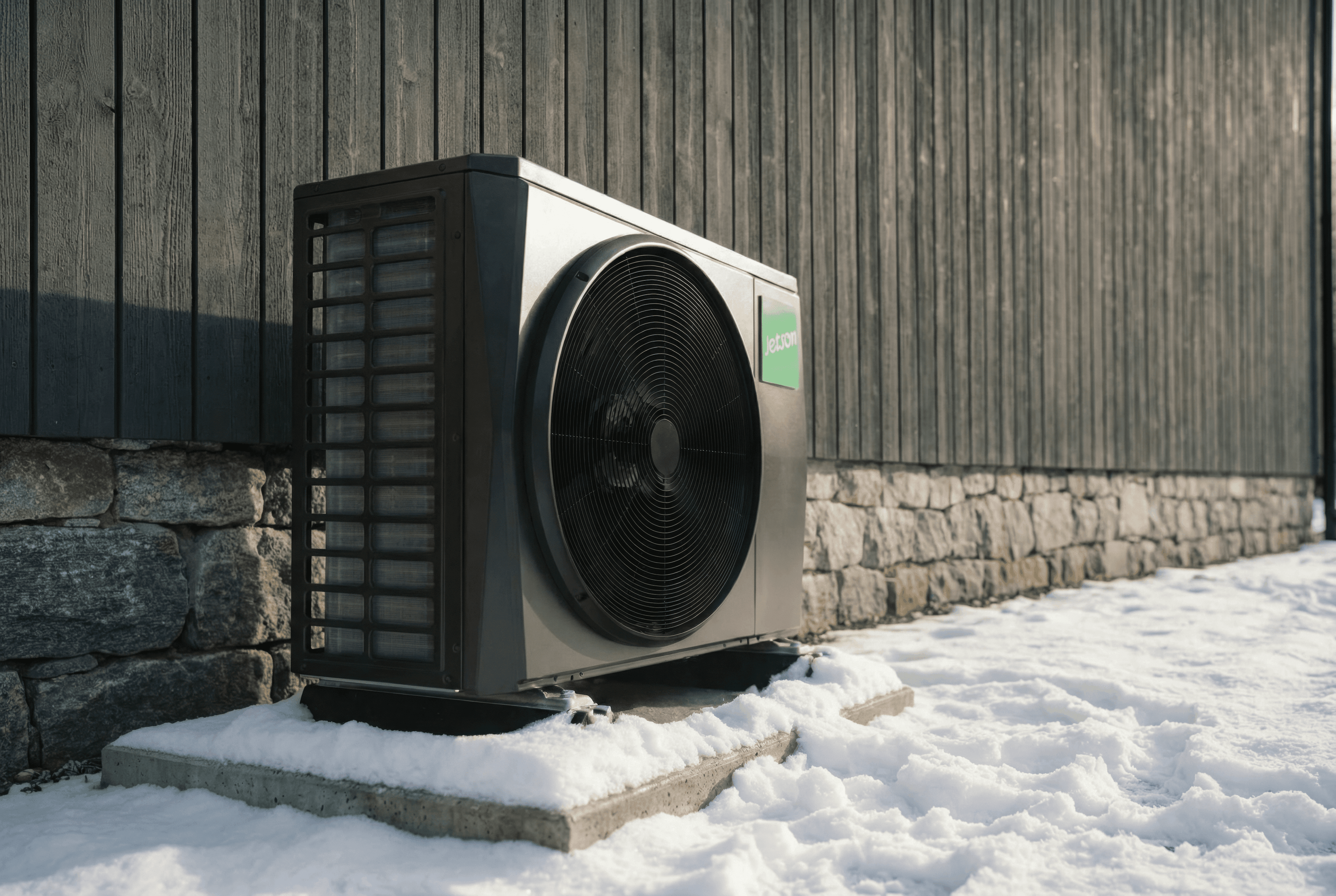
There's heat in cold air (really)
Temperature is relative. Even at -22°F, air molecules are still moving, and that movement is thermal energy. It's not until you get close to absolute zero (-459°F) that molecular motion stops entirely. So while -10°F feels brutally cold to you, there's still a meaningful amount of heat energy in that air for a heat pump to work with.
A heat pump captures that energy using a refrigerant, which is a fluid specifically chosen because it boils at an extremely low temperature. When the refrigerant passes through the outdoor unit's heat exchanger, it's colder than the surrounding air, even in the dead of winter. That temperature difference causes heat to flow naturally from the air into the refrigerant, the same way a cold sponge absorbs water. The refrigerant evaporates, the compressor pressurizes it (which raises its temperature significantly), and that concentrated heat gets delivered inside your home.
This is the same basic process your refrigerator uses, just in reverse. Your fridge pulls heat out of a cold box and dumps it into your kitchen. A heat pump pulls heat out of cold outdoor air and dumps it into your living room. If you want the full walkthrough, here's the basic heat-pump cycle.
Why older heat pumps struggled in the cold
If you've heard that heat pumps don't work in cold weather, that reputation came from somewhere real. Older systems used basic compressors and refrigerants that weren't designed for extreme temperatures. Once outdoor temps dropped below about 14°F, those systems lost so much capacity that electric resistance backup heat had to kick in, which is essentially a giant toaster running inside your ductwork. It worked, but it was expensive to operate and defeated the purpose of having a heat pump in the first place.
If your neighbor had one of those systems in 2010 and told you their heat pump couldn't keep up in January, they weren't wrong. The technology just wasn't there yet.
What changed
Today's cold-climate heat pumps are a fundamentally different product. Three things made the difference.
First, modern systems use variable-speed inverter compressors. Instead of cycling on and off at full blast like older single-stage units, these compressors adjust their speed continuously to match how much heating your home actually needs. When it's extremely cold outside and the gap between outdoor and indoor temperatures is large, the compressor ramps up and works harder. It can also run at a higher compression ratio, which means it squeezes more heat out of the refrigerant at each pass.
Second, the refrigerants themselves have improved. Newer formulations have lower boiling points and better thermodynamic properties at extreme temperatures. That means the refrigerant can still efficiently absorb heat from outdoor air, even when that air is well below zero.
Third, the control systems are smarter. Modern heat pumps use sensors and software to continuously optimize defrost cycles, refrigerant flow, and fan speeds based on real-time conditions. Older systems would run timed defrost cycles whether they needed them or not, wasting energy. Current systems defrost only when frost actually builds up, and they do it faster.
The result of all three improvements working together is a system that maintains its rated heating capacity down to -22°F without backup heat. These aren't warm-weather units with a cold-weather mode tacked on. They're engineered from the ground up for serious winters.
What this actually feels like in your home
One concern people have is that heat pump air feels cooler than furnace air. There's a grain of truth to this, but it's misleading. A gas furnace blasts air at around 130-140°F in short, intense cycles. A heat pump delivers air at around 90-105°F, but it runs for longer, more consistent periods. Your home reaches and holds the same temperature either way. Many homeowners actually prefer the heat pump approach because it eliminates the hot-cold cycling that furnaces create, where you're too warm right after the furnace kicks on and too cold right before it fires up again.
With a heat pump, the temperature in your home stays remarkably steady. You set your thermostat, and the system just quietly maintains it.
The efficiency advantage doesn't disappear in winter
Heat pumps are often described as being 300% efficient, which sounds impossible until you understand what it means. Because a heat pump is moving heat rather than generating it, every unit of electricity it uses can deliver two to three units of heat into your home. That ratio (called the coefficient of performance, or COP) does drop as outdoor temperatures fall, but even at -15°F, a modern cold-climate heat pump typically operates at a COP of 1.5 to 2.0. That means you're still getting 50-100% more heat energy than you're paying for in electricity, which is significantly better than any fuel-burning system can offer. A gas furnace, even a high-efficiency one, tops out at about 96% efficiency and declines from there.
So yes, a heat pump works harder when it's extremely cold, and it uses more electricity on those days. But it's still a more efficient way to heat your home than burning gas or oil, even in the worst conditions your winter can throw at it.
At Jetson, every system we install is a cold-climate system
We don't offer warm-weather heat pumps with an asterisk next to the temperature rating. Every unit we install is rated for extreme cold, because we operate in places like British Columbia, Colorado, Massachusetts, and New York, where real winters are just part of life. Here's more on what a cold-climate heat pump is.
Our approach starts with a detailed thermal analysis of your home so the system is sized correctly for your specific situation, including your local design temperature (the coldest it's likely to get in a typical winter). Getting this right means your heat pump delivers comfortable, consistent heat on the coldest nights of the year without leaning on backup systems.
If you're curious about what switching to a heat pump would look like for your home, you can see what it would cost for your home and the rebates available in your area.